
How is petroleum formed?
Are you looking for an easy way to teach your child about rocks and minerals? We’ve put together a set of free materials that parents and teachers can use right away. In this lesson, your child will dive into the fascinating world of petroleum formation.
We’ll explore the long process by which ancient marine life creates liquid fuel. Explore science in a more engaging way with captivating 3D videos and interactive quizzes. Download our app to get started!
Table of Contents
What you will learn from this lesson
- Petroleum begins when marine organisms die.
- Petroleum is found in underground sedimentary rocks.
- Petroleum is used as a fuel for cars and to make plastic toys.
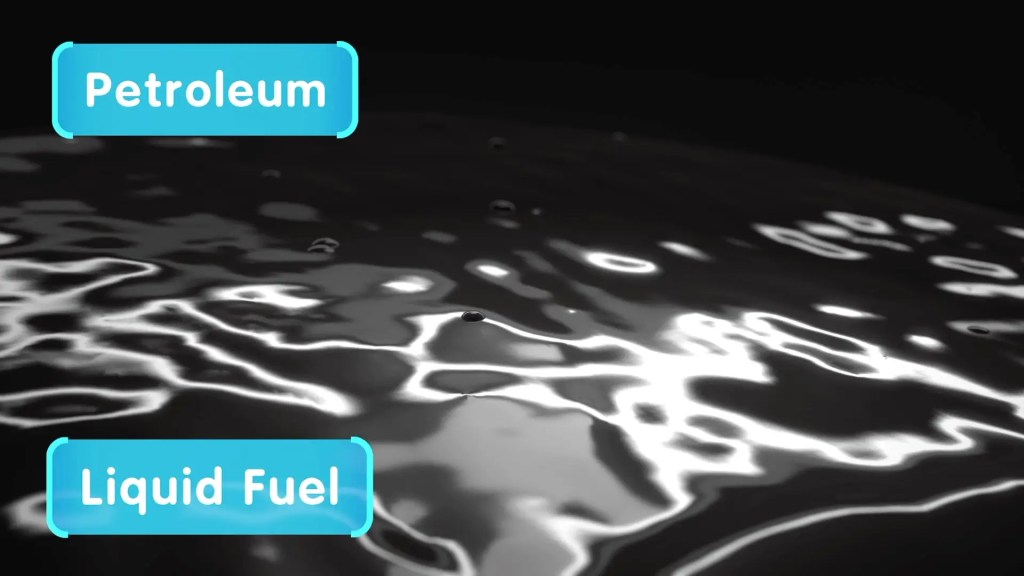
Petroleum is an essential liquid fuel hidden within rocks. The story of how petroleum is formed dates back to the Paleozoic Era, hundreds of millions of years ago. This energy resource comes from the remains of ancient marine organisms.
Where Does Petroleum Come From?
The process begins when marine organisms die. Their remains then sink to the sea floor. Over time, these remains are buried deeper and deeper under layers of sediment.
Once buried, microbes decompose the remains of these ancient animals. This decomposition transforms the remains into the raw material needed for petroleum formation. This transformation happens over long time periods.
After the decomposition stage, the raw material is subjected to high pressure and heat. This extended influence of pressure and temperature is what finally transforms the material into petroleum.
Where is Petroleum Found?
Petroleum can be found in sedimentary rocks. The distribution of petroleum is very wide. It is often located in the underground sedimentary rocks of low-lying areas.
Oil is extracted both on land and at sea. Offshore drilling platforms are used to extract oil from under the sea. On land, productive oil wells help bring the oil to the surface.
What is Petroleum Used For?
Petroleum is a versatile energy source. It is used in many applications. For instance, it is used as a fuel for cars. It is also a key material for manufacturing products like plastic toys.
A major advantage of petroleum is that it’s easy to transport and store. However, it is a non-renewable resource. The extraction and use of petroleum can also cause pollution.
Fun Fact
- Microbes helped break down these dead sea animals before pressure and heat turned them into petroleum.
- Oil sometimes forms with a partner called natural gas, which appears as bubbles.
- Petroleum is a non-renewable resource, meaning it takes hundreds of millions of years to create.
Vocabulary
- Petroleum: A dark, liquid fuel found inside rocks that was made from very old sea life.
- Ancient Marine Organisms: The dead fish and other sea life whose remains sank to the seafloor a long time ago. They are the starting material that turns into petroleum.
- Microbes: Very tiny living things that break down the remains of dead sea life. This is the first step in creating petroleum.
- Natural Gas: Another energy source that can form in the ground at the same time and in the same way as petroleum.
- Non-renewable: A resource that took millions of years to form and cannot be quickly made again once we use it up.