
What Is the Highland Climate?
Are you looking for an easy way to teach your child about weather and climate? We’ve put together a set of free materials that parents and teachers can use right away. In this lesson, your child will dive into the fascinating world of the highland climate.
We’ll explore the unique weather patterns found in high-altitude regions. Explore science in a more engaging way with captivating 3D videos and interactive quizzes. Download our app to get started!
Table of Contents
What you will learn from this lesson
- Highland climate is found in mountains and plateaus.
- Temperature drops as altitude is gained.
- The windward side receives more rainfall.
Where Can You Find a Highland Climate?
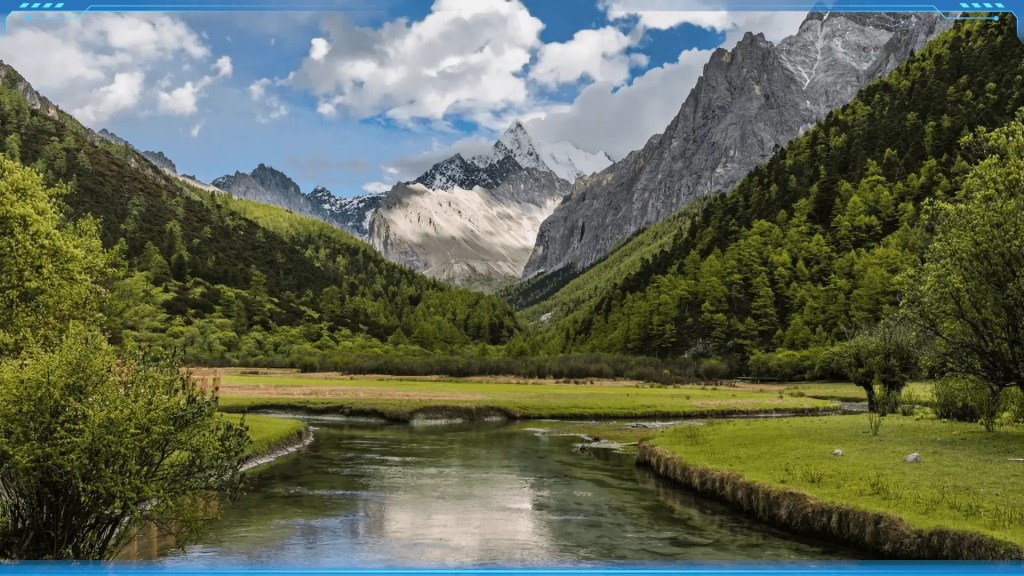
The highland climate is found in high-altitude regions, such as mountains and plateaus, where its characteristics are largely determined by height. This climate is special because you can observe a wide range of different landscapes and conditions within a single region. For example, as you travel up a mountain, you might pass through forests, grasslands, and eventually reach snowy, cold peaks, experiencing changes in scenery that almost condense all climate types. Even during the summer, snow can be present on the mountaintops in a highland climate region.
How Does Altitude Affect Temperature in a Highland Climate?
In the highland climate, temperature is primarily affected by the elevation. As you move higher up, the temperature decreases. Specifically, the temperature drops by about 6.5°C for every 1,000 meters (or 3.5°F for every 1,000 feet) you climb. This continuous drop in temperature means that the very high areas of the highland climate remain cold throughout the entire year.
What Affects Rainfall in a Highland Climate?
The precipitation patterns in a highland climate are mainly influenced by the terrain. Rainfall is generally unevenly distributed between the mountain’s sides. The side of the mountain facing the wind, known as the windward side, receives more moisture, which rises along the slope and forms rainfall. Conversely, the side sheltered from the wind, the leeward side, receives very little precipitation because the moisture has been consumed before it crosses the peak.
Fun Fact
- In a single Highland Climate region, you can see landscapes ranging from forests and grasslands to snow-capped peaks.
- It is perfectly normal for mountain peaks in a Highland Climate to have snow, even during the summer months.
- Climbing 1,000 meters (3,300 feet) makes the air feel about 6.5°C (12°F) colder.
- The dramatic changes in scenery from the bottom to the top of a mountain virtually condense all the world’s climate types.
- A Highland Climate features a rainy side of the mountain and a dry side due to the mountain blocking the wind and moisture.
Vocabulary
- Highland Climate: A climate region found in high-altitude areas like mountains and plateaus, where temperature is primarily affected by elevation.
- Terrain: The physical features of an area of land that significantly influence precipitation patterns in a highland climate.
- Windward Side: The side of a mountain that faces the wind, where moisture rises along the slope to cause more rainfall.
- Leeward Side: The side of a mountain that is sheltered from the wind, where little precipitation occurs because the moisture is already spent.