
What is the Solar System?
Are you looking for an easy way to teach your child about space? We’ve put together a set of free materials that parents and teachers can use right away. In this lesson, your child will dive into the fascinating world of the solar system.
We’ll explore the components and structure of our solar system. Explore science in a more engaging way with captivating 3D videos and interactive quizzes. Download our app to get started!
Table of Contents
What You Will Learn From This Lesson
- The solar system has the sun, planets, and satellites.
- Terrestrial planets are rocky.
- Jovian planets have hydrogen and helium.
- Earth’s position, liquid water, and oxygen enable life.
How Is the Solar System Organized?
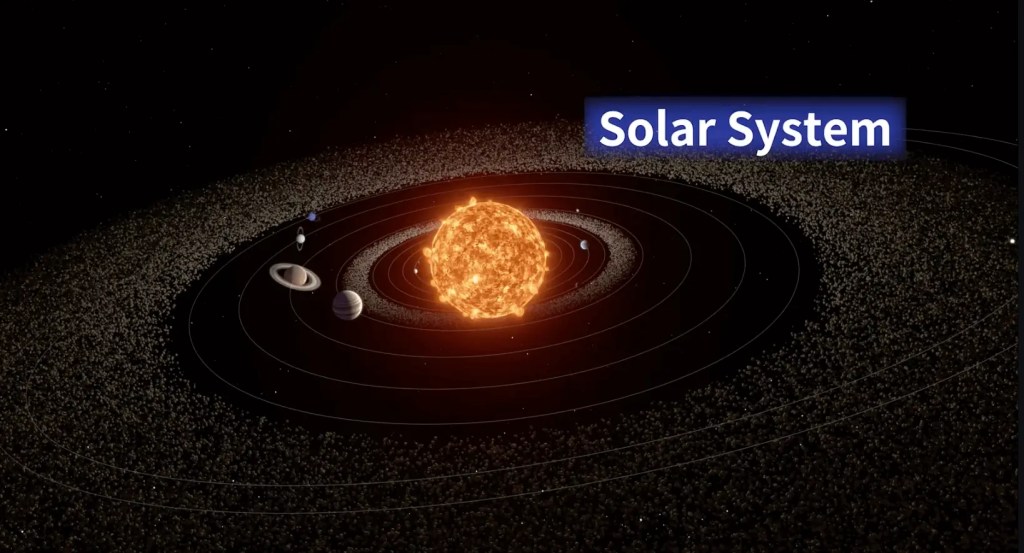
The solar system is located toward the edge of the Milky Way galaxy. Think of the Milky Way as a large city, where the solar system would be the suburbs. It includes the sun, eight planets, over 200 known satellites, as well as millions of asteroids and many comets.
The sun is the core of the solar system, acting like a massive battery that generates light and heat for all the other bodies. The other components, such as the planets and smaller celestial bodies, orbit the sun. The solar system also includes the asteroid belt, located between the two planet groups, the Kuiper Belt beyond the eight planets, and the Oort Cloud, a spherical shell surrounding the system that contains many comets.
How Are the Planets Classified?
The eight planets are divided into two main categories: Terrestrial planets and Jovian planets. These two groups have significant differences.
Terrestrial Planets: These are the four planets closest to the sun—Mercury, Venus, Earth, and Mars. They are characterized by their small size and hard, rocky surfaces. Because they are closer to the sun than the outer planets, some can be very hot, though Mars is actually very cold. This group has a combined total of only three satellites.
Jovian Planets: These four planets are farther from the sun—Jupiter, Saturn, Uranus, and Neptune. They are relatively large in size and have very low surface temperatures. Unlike the Terrestrial planets, they are primarily composed of hydrogen and helium instead of a rocky crust. The Jovian planets are orbited by over 200 satellites.

Why Is Earth the Only Habitable Planet?
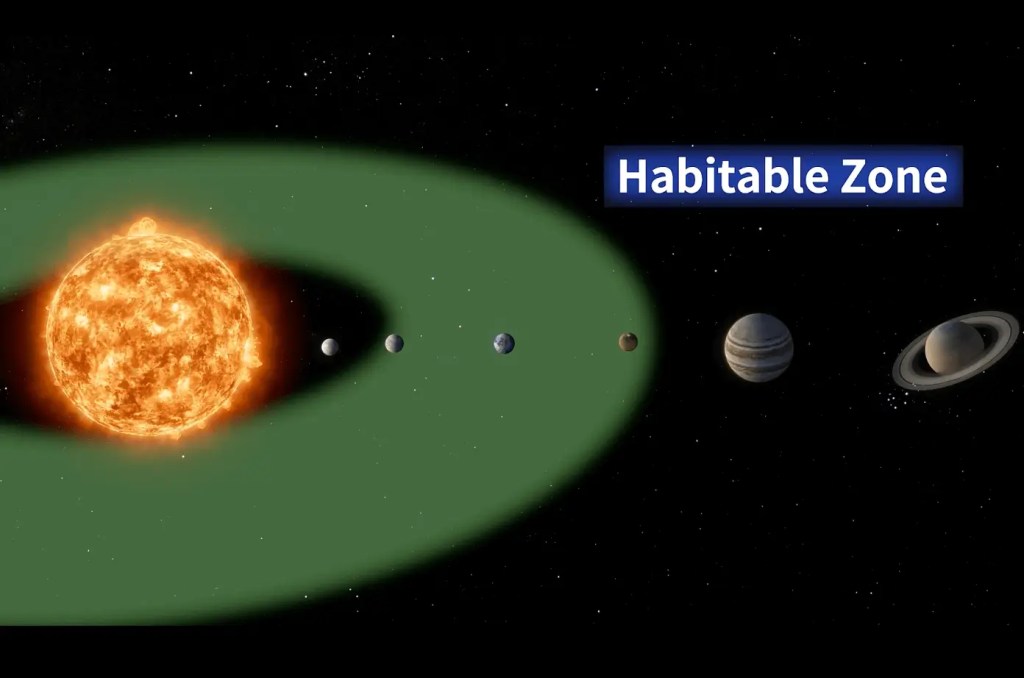
The habitable zone is the area around a star where conditions might allow for life to exist. In the solar system, this zone is situated between the orbits of Venus and Mars. While Venus, Earth, and Mars are all within this zone, Earth is the only one known to sustain life.
Earth’s position places it in the middle of the habitable zone, providing the ideal temperature for life. Venus is too hot, and Mars is too cold. The presence of liquid water covering most of Earth’s surface and a suitable atmosphere with enough oxygen are crucial factors that enable life. Earth is also protected from small celestial impacts by its natural satellite, the moon, and the outer giant planets.
Fun Fact
The Sun is the center of our solar system, not the whole universe.
If the Milky Way were a city, our entire solar system would be located in the suburbs.
The solar system originated about 4.6 billion years ago from a swirling cloud of gas and dust.
Vocabulary
- Solar System: A system consisting of the sun, eight planets, over 200 known satellites, asteroids, comets, and other celestial bodies.
- Sun: The core of the solar system, which emits light and heat to provide energy to the entire system.
- Terrestrial Planets: The four small, warm, inner planets that are rocky, like Earth: Mercury, Venus, Earth, and Mars.
- Jovian Planets: The four large, cool, outer planets that are mostly gas, like Jupiter, Saturn, Uranus, and Neptune.
- Satellite: A celestial body that orbits a planet but does not produce its own light.
- Habitable Zone: The region around a star where conditions are thought to be suitable for life to exist.
- Atmosphere: The layer of gas surrounding a planet, which, in Earth’s case, contains the oxygen needed for life.
- Milky Way: The galaxy in which the solar system is located, near its edge.
- Asteroids: Tens of millions of small bodies found in the asteroid belt between the Jovian and Terrestrial planets.
- Comets: Celestial bodies, many of which gather in the Oort Cloud, that revolve around the sun.