
What Are the Cold Seeps?
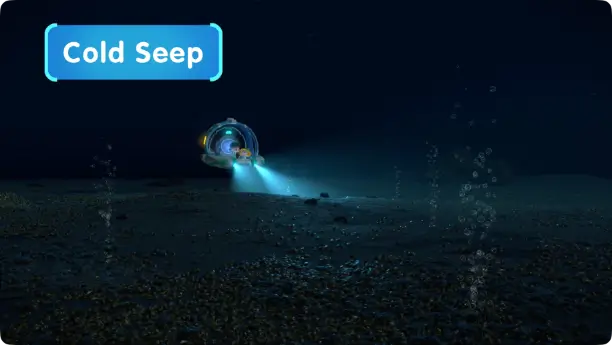
Are you looking for an easy way to teach your child about cold seeps? We’ve put together a set of free materials that parents and teachers can use right away. In this lesson, your child will dive into the fascinating world of deep-sea geology.
We’ll explore the natural gas bubbles and tough animals found in cool seafloor environments. Explore science in a more engaging way with captivating 3D videos and interactive quizzes. Download our app to get started!
Table of Contents
What You Will Learn From This Lesson
- Cold seeps are seafloor environments fueled by natural gas.
- Deep-sea annelids demonstrate segmented bodies and specialized physical traits.
What characterizes the cold seeps?
The cold seeps are unique areas on the ocean floor where natural gas bubbles up from the earth. These locations are much cooler than hydrothermal vents, providing a different kind of deep-sea oasis for marine life. Instead of using minerals from hot smoke, the animals living here use natural gas as their primary source of energy.
Which sea animals live in the cold seeps?
Many adaptable marine animals thrive at the cold seeps, including mussels and squat lobsters. These creatures are remarkably tough because they can survive in both hot hydrothermal vents and much cooler environments. Squat lobsters are especially interesting because they are covered in bacteria that produce food for them using the gases found at the site.
The cold seeps are also home to marine annelids like the deep-sea scale worm and tube worms. Scale worms are recognized by their symmetrical bodies, repeated segments, and hairy feet called parapodia. Tube worms also inhabit these areas and can grow to over 9 feet long. While they live inside protective tubes, they share the same biological traits as other segmented worms.
Fun Fact
- The giant tube worm Riftia pachyptila grows faster than almost any other animal in the deep sea.
- Some kind of giant tube worm can live for over 250 years, watching centuries pass by.
Vocabulary
- Cold Seep: A specialized area on the ocean floor where natural gas bubbles up from the Earth’s crust to support unique communities of life.
- Natural Gas: A chemical substance bubbling from the seafloor that certain deep-sea bacteria and animals use as a primary source of energy.
- Squat Lobster: A hairy-looking marine crustacean that is uniquely adapted to live in both scorching hot hydrothermal vents and freezing cold seep environments.