
What Is a Carnivorous Plant?
Are you looking for an easy way to teach your child about carnivorous plants? We’ve put together a set of free materials that parents and teachers can use right away. In this lesson, your child will dive into the fascinating world of botany.
We’ll explore how certain plants use clever traps to catch insects for nutrients. Explore science in a more engaging way with captivating 3D videos and interactive quizzes. Download our app to get started!
Table of Contents
What You Will Learn From This Lesson
- Carnivorous plants eat insects to obtain nutritions.
- Carnivorous plants use active or passive trapping strategies.
Why do some plants eat insects?
A plant that catches and eats small animals for nutrition is called a carnivorous plant. While most plants get everything they need from the soil and photosynthesis, carnivorous plants often live in environments where the soil lacks enough nitrogen.
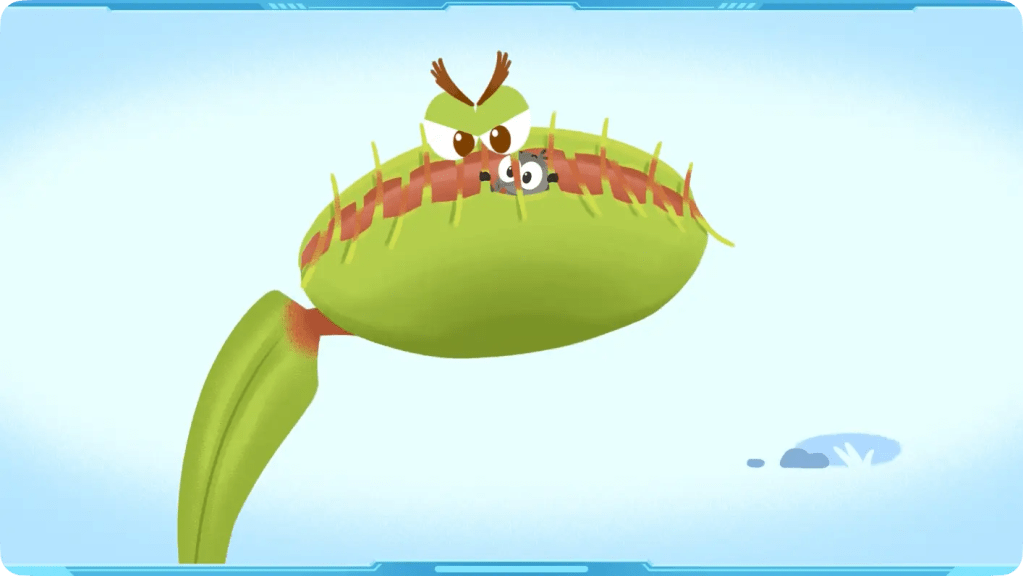
Because insects are full of this essential nutrient, these plants eat them to get what they need to survive. It is like an extra snack that helps them stay healthy in poor soil.
How do carnivorous plants catch their prey?
Carnivorous plants have developed many unique strategies and specialized structures to trap insects. Some plants wait for insects to come to them, while others actively snap shut to catch their prey.
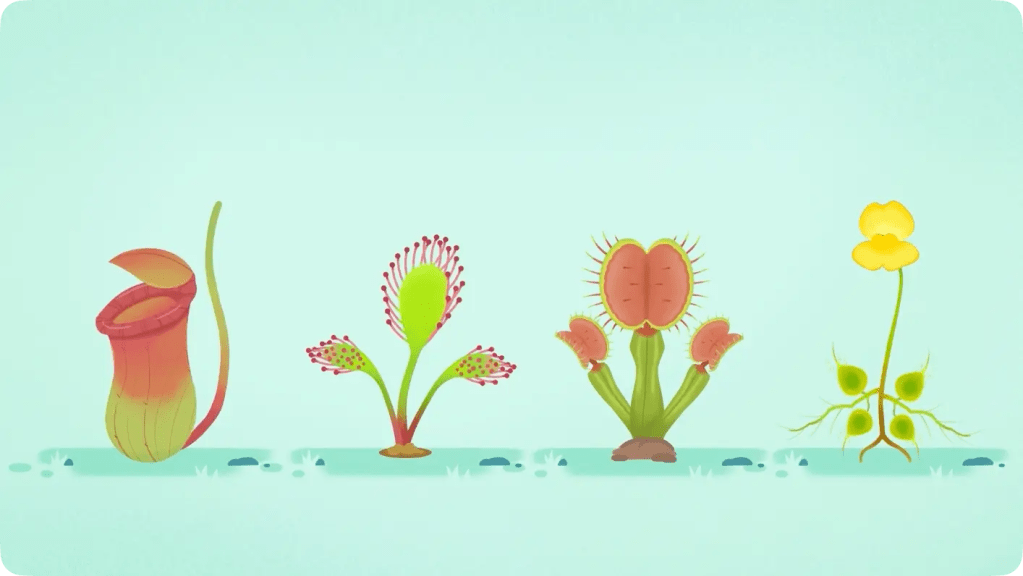
- Pitcher Plants: These plants have a leaf shaped like a bottle called a pitcher. The surface is smooth and covered in nectar to attract insects. Once an insect lands, it slips on the slippery inside surface and falls into the liquid at the bottom, where it is trapped.
- Sundews: These plants use a “sticky” strategy. They are covered in a sticky juice that acts like glue, trapping any insect that touches it.
- Venus Flytraps: This plant uses a fast-acting trap. It has tiny trigger hairs; if an insect touches these hairs twice in a short period, the leaves snap shut instantly.
- Golden Bladderworts: This underwater plant uses small pouches called bladders.

When an insect touches its sensitive hairs, the trap opens and sucks the insect inside along with the water at super speed.
Fun Fact
- Pitcher plants use sweet nectar to trick insects into a slippery trap.
- A Venus flytrap is a “smart” hunter—it won’t close unless its hairs are touched twice!
- Golden bladderworts are underwater speedsters that suck in prey like a vacuum.
- Carnivorous plants still use photosynthesis; insects are just their “vitamin supplements.”
- Sundews look like they are covered in morning dew, but it’s actually super-strong glue.
Vocabulary
- Carnivorous Plant: A specialized plant that captures and digests insects or small animals to supplement its nutritional needs, particularly in nutrient-poor environments.
- Nitrogen: A vital chemical element and nutrient that carnivorous plants obtain from their prey to survive in soil that lacks sufficient minerals.
- Prey: The insects or small organisms that are targeted, captured, and consumed by a carnivorous plant.
- Active Trap: A type of plant structure that involves rapid movement to capture prey, such as the snapping leaves of a Venus Flytrap or the suction of a bladderwort.
- Passive Trap: A trapping mechanism that does not require plant movement, instead relying on slippery surfaces or sticky substances to catch insects.
- Pitcher: A specialized, bottle-shaped leaf structure with a slippery interior and nectar, designed to cause insects to fall into a pool of digestive enzymes.
- Trigger Hairs: Highly sensitive sensors found on the leaves of plants like the Venus Flytrap that signal the trap to close when touched by an insect.
- Bladders: Small, underwater pouches used by plants like the golden bladderwort to suck in prey using a vacuum-like mechanism.
- Nectar: A sweet liquid produced by plants to attract insects; in carnivorous plants, it is often used as “bait” to lure prey into a trap.