
What Did Dinosaurs Eat?
Are you looking for an easy way to teach your child about dinosaurs? We’ve put together a set of free materials that parents and teachers can use right away. In this lesson, your child will dive into the fascinating world of what dinosaurs eat.
We’ll explore the fossil evidence scientists use to determine a dinosaur’s diet. Explore science in a more engaging way with captivating 3D videos and interactive quizzes. Download our app to get started!
Table of Contents
What You Will Learn From This Lesson
- Gastroliths and microscopic tooth scratches identify dinosaurs as plant-eaters.
- Teeth, claws, and bone fragments in coprolites identify dinosaurs as meat-eaters.
How Do We Know Dinosaurs Ate Plants?
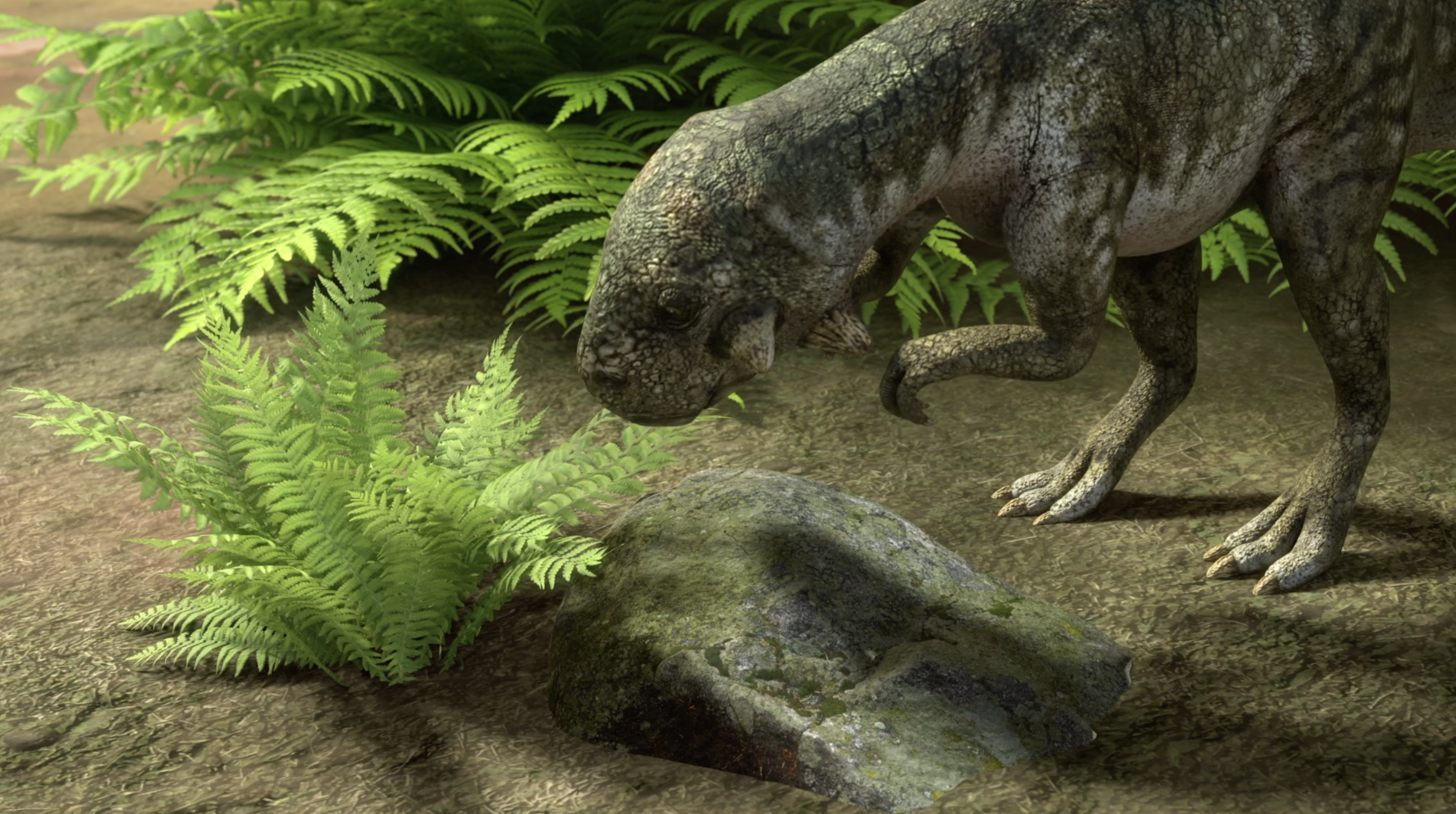
Scientists use various fossil clues to determine that some dinosaurs were herbivores, or plant-eaters. One key piece of evidence comes from specialized stones called gastroliths. The Psittacosaurus, for instance, swallowed small stones to help grind down the tough plants it consumed. Its teeth weren’t suitable for chewing, so the stones in its stomach broke down the food, aiding digestion. Scientists found these plant seeds and small stones right inside the belly area of Psittacosaurus fossils, confirming its diet.
Other plant-eating dinosaurs, like the giant Diplodocus, used their teeth more actively. The Diplodocus’s teeth were located mostly in the front and stuck out, working like a rake to pick leaves off branches. Consuming large amounts of tough plants every day caused wear and tear on their teeth. This wear is visible to scientists as microscopic scratches or scars on the surface of the fossilized teeth. These tiny marks tell us that the Diplodocus was a dedicated plant-eater.
What Proof Shows Dinosaurs Ate Meat?
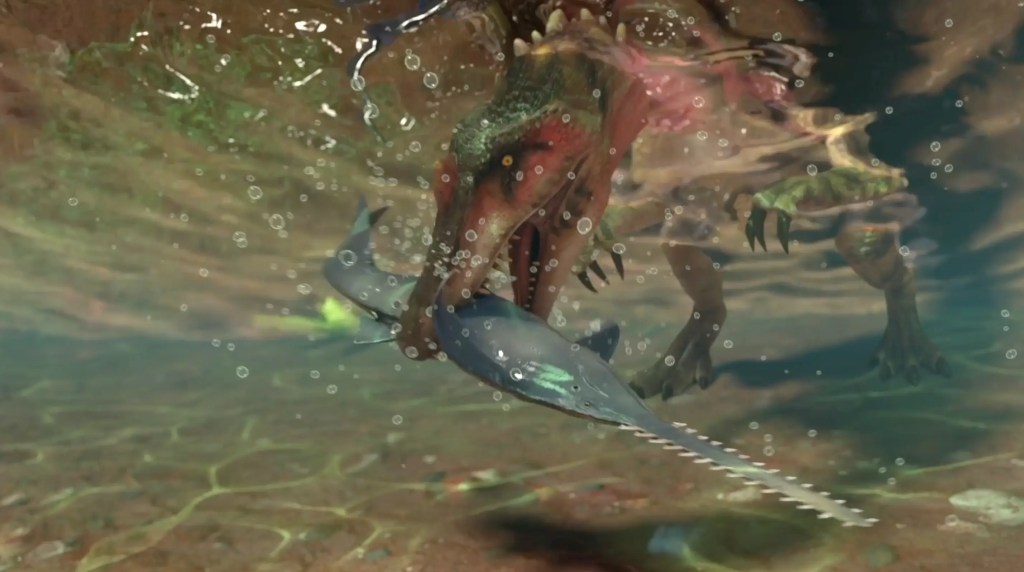
To figure out what dinosaurs ate when they were carnivores, or meat-eaters, scientists look for different kinds of clues, starting with the dinosaurs’ own anatomy. The Spinosaurus, for example, had sharp, cone-shaped teeth with vertical ridges, making them excellent tools for catching and tearing prey. This dinosaur also had sharp claws that could slice through chunks of meat like small knives, making it easier to feed.
Another direct line of evidence comes from the contents found in a predator’s mouth or stomach. An Onchopristis tooth was discovered in the mouth of a Spinosaurus fossil, leading to speculation that it ate fish. Perhaps the most unusual clue is fossilized poop, known as coprolites. The fossilized waste of the Tyrannosaurus often contains undigested bone fragments. Since bones are hard to digest, their presence confirms that the Tyrannosaurus frequently swallowed meat and bone together and was a meat-eater. By studying their teeth, claws, and even their fossilized waste, we can deduce what dinosaurs ate.
Fun Fact
- The small Psittacosaurus had a beak like a parrot that helped it slice through tough plants.
- The gastroliths swallowed by Psittacosaurus were small stones that functioned as a natural food processor in its belly.
- The teeth of the Diplodocus were long and lined up like a garden rake, perfect for pulling leaves off branches.
- Microscopic scratches on a dinosaur’s fossilized teeth can tell scientists that it was a plant-eater.
- Scientists can determine a dinosaur’s diet by examining undigested bone fragments found in its fossilized waste.
Vocabulary
- Gastroliths: Small stones that certain herbivorous dinosaurs, such as the Psittacosaurus, would swallow to help grind and digest the tough plant material in their stomachs.
- Microscopic Scratches: Tiny, almost invisible marks or scars found on the surface of fossilized dinosaur teeth that resulted from the wear and tear of chewing on plants.
- Bone Fragments: Pieces of undigested bone found in a carnivorous dinosaur’s fossilized poop, which indicates that the dinosaur often swallowed meat and bones together.
- Herbivorous: The classification for a dinosaur that ate only plants.
- Carnivorous: The classification for a dinosaur that ate only meat.