
How Do Eyes Work?
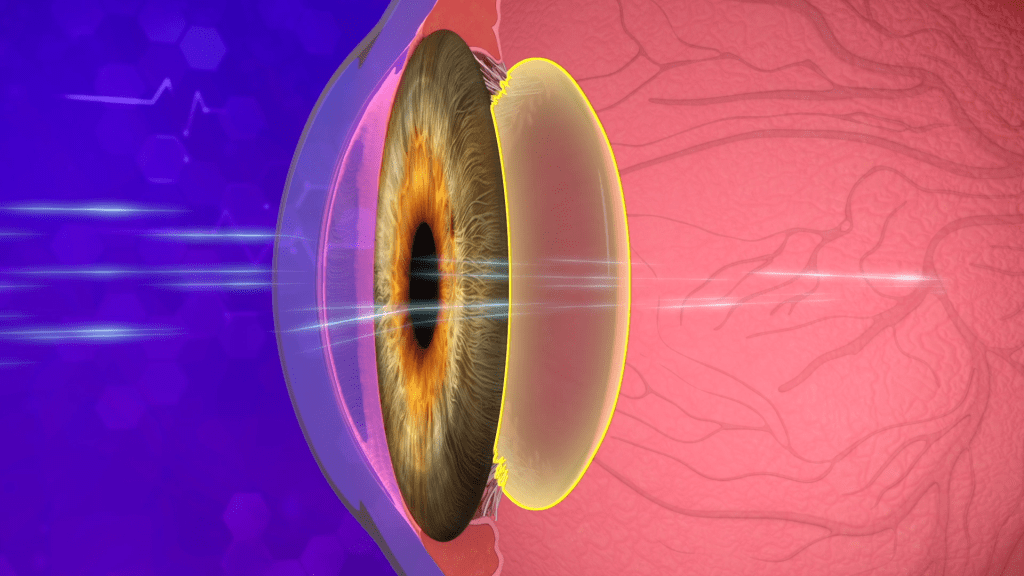
Are you looking for an easy way to teach your child about the human body? We’ve put together a set of free materials that parents and teachers can use right away. In this lesson, your child will dive into the fascinating world of how eyes work.
We’ll explore the three essential steps involving the pupil, lens, and retina that allow us to see clearly. Explore science in a more engaging way with captivating 3D videos and interactive quizzes. Download our app to get started!
Table of Contents
What You Will Learn From This Lesson
- The pupil, lens, and retina work together to allow us to see.
- Blurry vision is often linked to changes in the eye’s shape or the way the lens focuses light.
What Are the Three Steps of Seeing?
First, light needs to enter your eye. That’s the job of the pupil, which looks like a black hole in the center of your eye. The pupil is actually a hole that can change size. When the light is too bright, the pupil shrinks to protect the eye from receiving too much light. When it’s dim, the pupil gets bigger so the eye can receive more light and see better.
The light that passes through the pupil then hits a transparent part called the lens. The lens is soft and bouncy and changes its shape, just like the pupil. It gathers the light together, which is the second step in seeing. Tiny muscles on both sides of the lens control its shape.
Finally, the light forms an image on the retina. The retina is full of visual cells. In the final step of seeing, these visual cells tell the brain what the image looks like.
How Does Blurry Vision Happen?
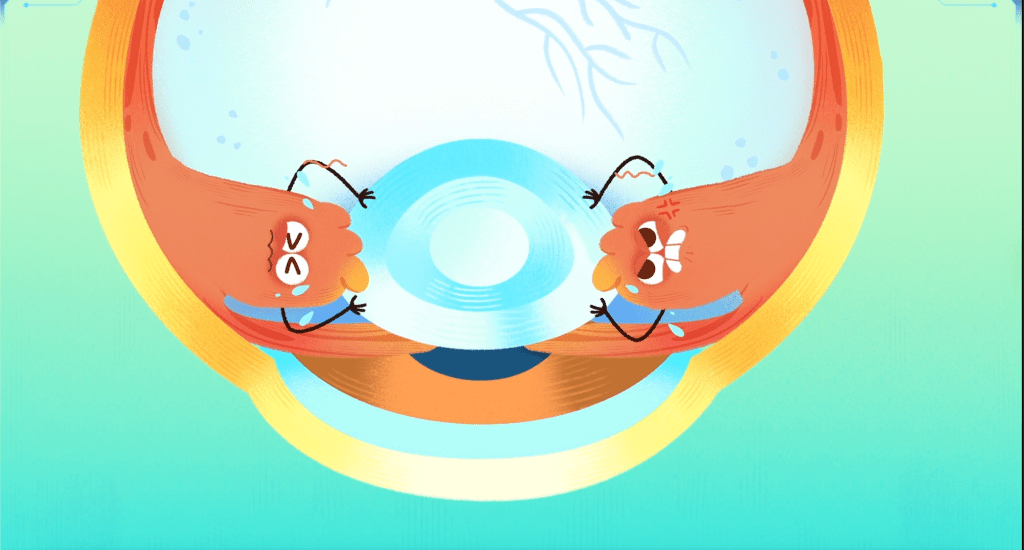
When you look at something up close, the lens becomes wider so the light can focus on the retina, letting you see nearby objects clearly. If you look at things far away, the lens becomes narrower, and now you can see distant objects clearly. If you look at things up close for too long, these muscles can get tired and can’t adjust the lens properly, which is what gives us blurry vision.
Fun Fact
- The pupil is the first step in seeing, acting like a hole to receive light into your eye.
- The iris is the colored part of the visual system, and the pigment within it determines your eye color.
- Your lens is transparent and can change its shape to help focus light on the retina.
- When light enters your eye, the image formed on the retina is actually upside-down.
- If you look closely at things for too long, the muscles that control the lens can become tired, causing blurry sight.
Vocabulary
- Pupil: The hole in the center of your eye that lets light come in. It shrinks in bright light and gets bigger in dim light to protect your eye and help you see.
- Lens: The clear, soft part of your eye that focuses the light coming in. It changes its shape to help you see things up close or far away.
- Retina: The back part of your eye where the image is formed. It has special cells that send the picture to your brain so you know what you are looking at.
- Visual Cells: Many cells located in the retina that sense the image formed by light. They send a signal to the brain so we can finally see.