
How Does the Tongue Work?
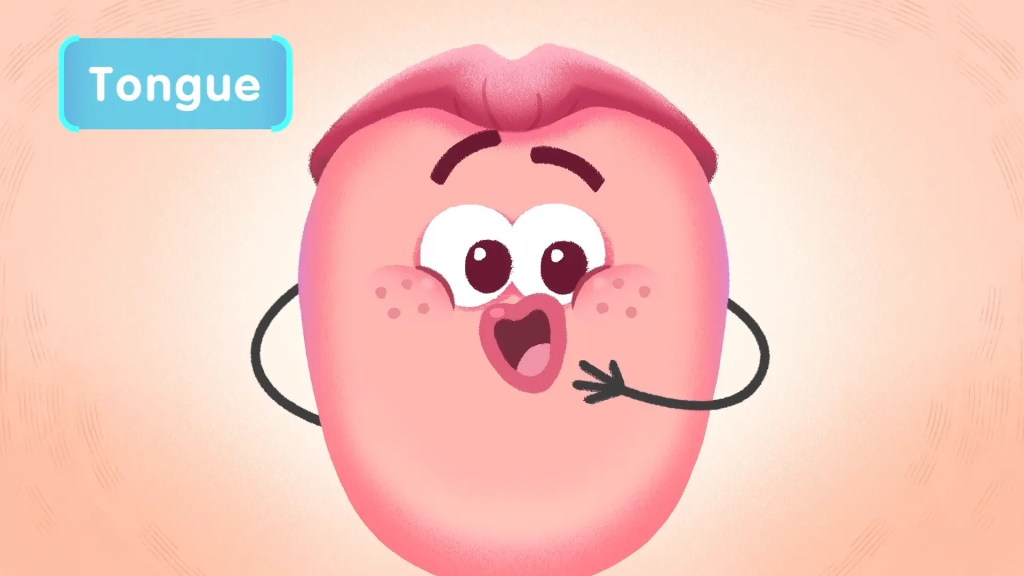
Are you looking for an easy way to teach your child about the human body? We’ve put together a set of free materials that parents and teachers can use right away. In this lesson, your child will dive into the fascinating world of how the tongue works.
We’ll explore the tongue’s function in helping us taste five different flavors and how it sends signals to the brain. Explore science in a more engaging way with captivating 3D videos and interactive quizzes. Download our app to get started!
Table of Contents
What You Will Learn From This Lesson
- The tongue is an organ that helps us taste.
- Taste buds on the tongue sense five different flavors and send signals to the brain.
What Are the Parts of the Tongue That Help Us Taste?

The tongue is an organ that helps us perceive taste. If you look closely at its surface, you will see many small bumps called papillae. Inside these papillae are the taste buds. Taste buds are the key sensory organs for understanding how the tongue works when it comes to flavor. These specialized structures can detect five different types of tastes.
The five distinct tastes the tongue can detect are: umami, sour, sweet, bitter, and salty. The tongue’s ability to sense these five flavors is fundamental to its role in the body.
How Does the Brain Know Flavor?

The process of flavor recognition is a fascinating part of how the tongue works. Once the taste buds detect one of the five distinct tastes, they perform a crucial task: they send signals about the detected flavor.
These taste signals are sent directly to the brain. After receiving the signals, the brain processes the information, allowing it to know the flavor. Because of this detailed process, we can taste a wide variety of different flavors. The tongue’s ability to accurately transmit taste signals is essential for enjoying and identifying food.
Fun Fact
- The surface of the tongue is covered in tiny bumps called papillae, which hold the taste buds.
- Our taste buds can detect five different tastes: umami, sour, sweet, bitter, and salty.
- The tongue is made up of a bunch of muscles.
Vocabulary
- Tongue: The soft, pink part inside your mouth that helps you taste food.
- Papillae: The many little bumps you can see on the surface of your tongue.
- Taste Buds: Tiny parts inside the papillae that detect the five different tastes in food.