
How Many Bones Do We Have in Our Bodies?
Are you looking for an easy way to teach your child about the human body? We’ve put together a set of free materials that parents and teachers can use right away. In this lesson, your child will dive into the fascinating world of how many bones we have in our bodies.
We’ll explore the human skeletal system and its protective functions. Explore science in a more engaging way with captivating 3D videos and interactive quizzes. Download our app to get started!
Table of Contents
What You Will Learn from This Lesson
- Bones enable us to stand.
- Bones give shape to the body and protect our organs.
What Is the Skeleton?
The human body of an adult typically contains 206 bones, all working together to form the skeleton.
The skeleton is the framework of the body, providing support. The bones that give the human body its shape also enable us to stand, as they support us. The skeletal structure is generally described as having three main parts:
- The Skull: Located at the top of the body.
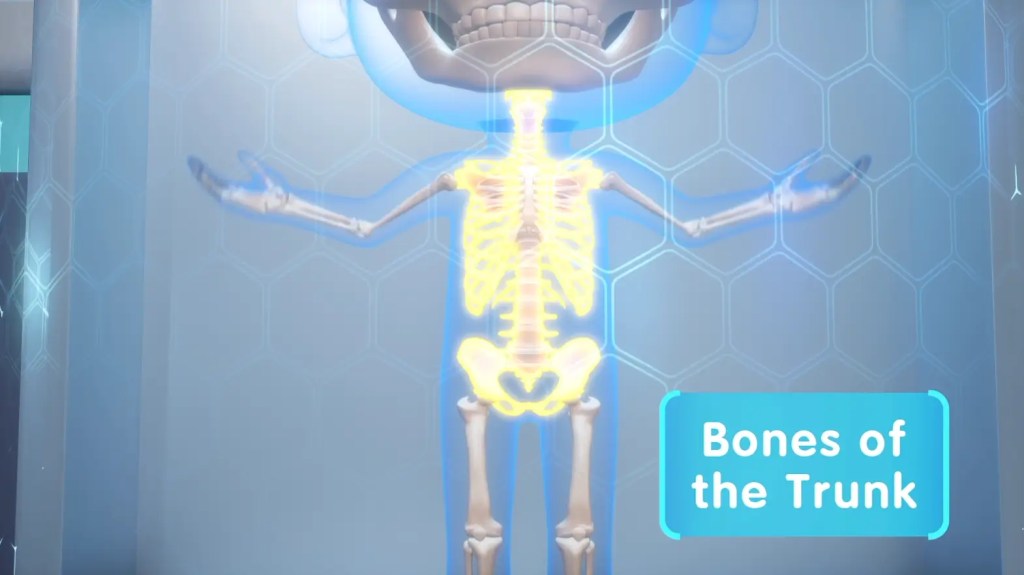
- The Trunk: The bones found below the skull.
- The Limb Bones: The bones in the arms and legs that are connected to the trunk
What Do Bones Do?
Bones have two primary roles: support and protection.
The bones of the trunk include the spine (or backbones), which supports the upper body. The bones in our legs, including the thigh bone and lower leg bones, support our body weight and help us stand. The thigh bone is the longest and largest bone in the human body.
For protection, the skull protects our brain. The ribs protect our lungs and heart. They are hard and lined up, resembling a cage. The large bones that form the pelvis protect the large intestine and bladder.
How Do Bones Enable Movement?
Movement relies on specialized components that allow the skeletal structure to be flexible and function.
- Bones cannot move by themselves; they work with joints and muscles to help us move.
- Joints are the places where two bones meet. They allow our bodies to move and bend at those spots, like your elbows or knees.
- The spine is made up of individual bones, called vertebrae, which are stacked and connected to make the spine flexible.
- Intervertebral discs are a type of cartilage found between the vertebrae. They maintain the spine’s flexibility and act as cushions to absorb shock, protecting the spine when we jump.
Fun Fact
- Your skull acts like a safety helmet to protect your brain.
- Your ribs form a protective cage around your heart and lungs.
- The pelvis is a large set of bones that helps support your body weight.
Vocabulary
- Skeleton: The framework of bones in the body, providing support and giving the human body its shape.
- Skull: The bone structure located at the top of the body that protects the brain.
- Trunk: The main part of the body that includes the bones found below the skull.
- Limb Bones: The bones in the arms and legs that are connected to the trunk.
- Spine: A flexible column of bones in the back that supports the upper body.
- Ribs: Hard bones lined up like a cage that protect the lungs and heart.
- Pelvis: Large bones that support body weight and protect the large intestine and bladder.
- Joints: The points where different bones meet, allowing bones to bend and enabling movement.
- Vertebrae: Individual bones that are stacked and connected to make the spine flexible.