
What is the Function of the Lungs?
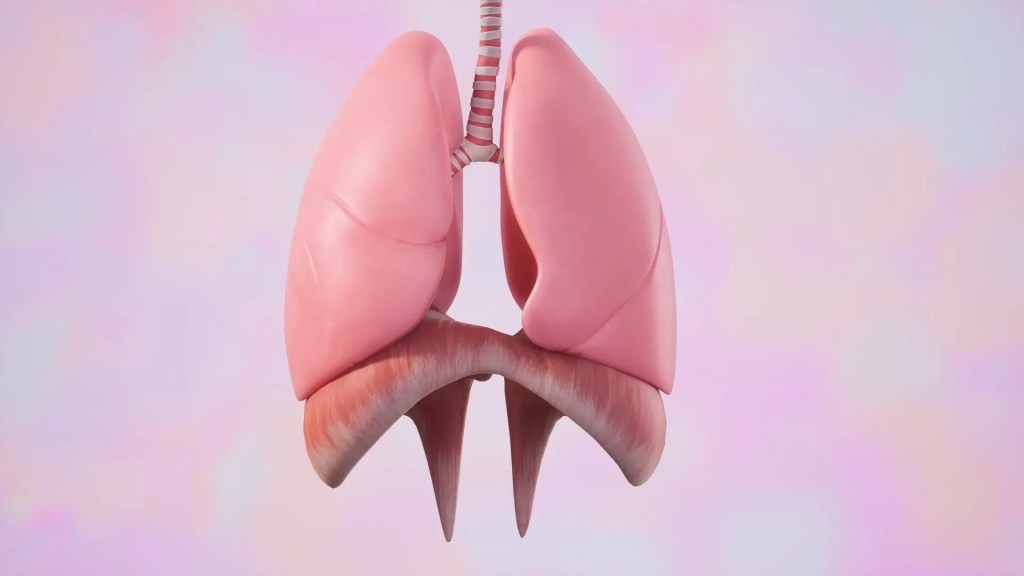
Are you looking for an easy way to teach your child about the human body? We’ve put together a set of free materials that parents and teachers can use right away. In this lesson, your child will dive into the fascinating world of the function of the lungs.
We’ll explore the vital process of gas exchange within the lungs. Explore science in a more engaging way with captivating 3D videos and interactive quizzes. Download our app to get started!
Table of Contents
What You Will Learn From This Lesson
- Important organs in the respiratory system include the nose, pharynx, larynx, trachea, and lungs.
- The lungs are the place in the body where gas exchange occurs.
How Does Air Travel Into Our Lungs?
The path of air begins as it enters the body through the nose. This is the first step of the process. Nose hairs and mucuswork to block incoming dust and bacteria. The air then passes through the pharynx and the larynx.
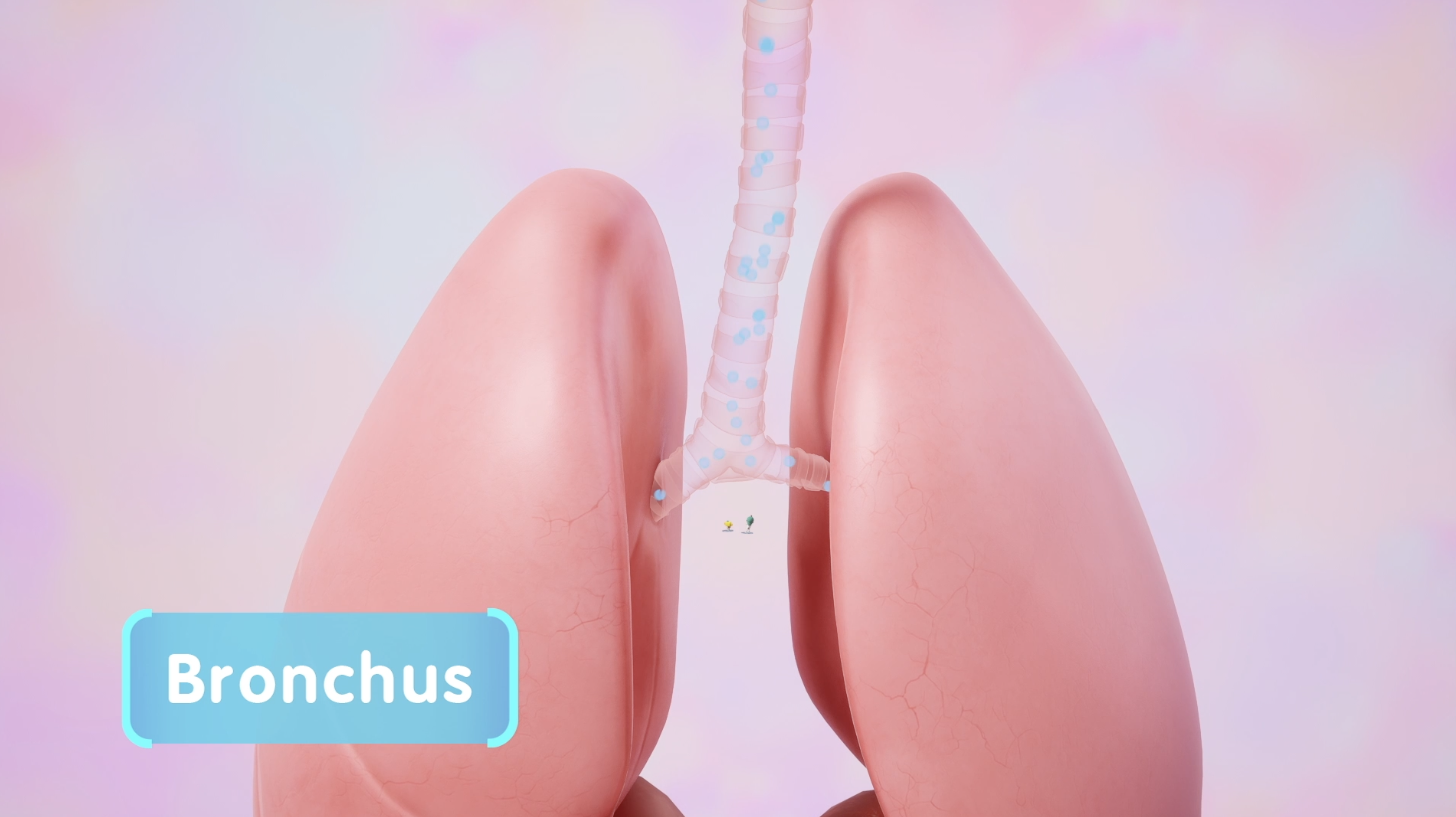
Next, the air enters the trachea, which carries it deeper inside the body. This airway is an important structure supported by tracheal rings. These rings are made of cartilage, which keeps the trachea open for air to pass through. The trachea also helps clean the air by producing mucus that traps dust and bacteria. Tiny, hair-like structures called cilia constantly sway upward to push this sticky mucus out. This expelled mucus is known as phlegm.
The third step is air entering the lungs. The trachea branches off into two tubes called bronchi. Each bronchus leads to one of the two lungs. When air is breathed in, the muscle called the diaphragm lowers to expand the lungs.
What Is the Gas Exchange in the Lungs?
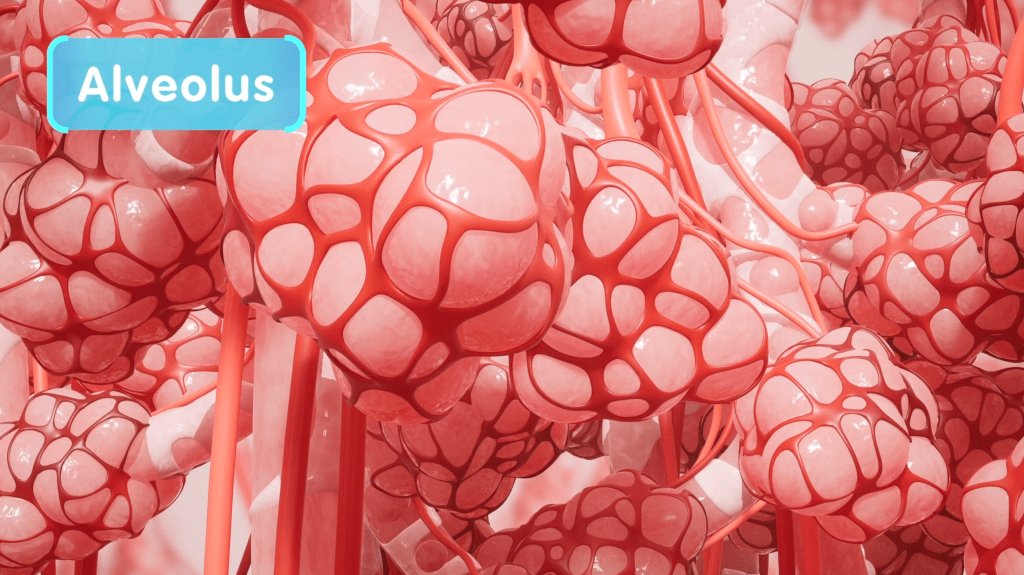
The main function of the lungs is to perform gas exchange. When air is breathed in, oxygen passes through the bronchi and enters the lungs. Inside, the bronchi divide into many tiny tubes called bronchioles. These bronchioles deliver the air to tiny air sacs called alveoli. There are about 300 million alveoli in the lungs.
The vital gas exchange takes place precisely within the alveoli. There is an abundance of oxygen in the alveoli, and it quickly passes from the air sac into the blood. Simultaneously, red blood cells traveling in the bloodstream carry carbon dioxide to the lungs. Carbon dioxide is a waste gas generated by all active body organs.
At the alveoli, a swap occurs: carbon dioxide enters the air sacs from the bloodstream. The oxygen enters the red blood cell, making the cell brighter. These cells, now filled with oxygen, travel where they are needed throughout the body. The carbon dioxide that was swapped into the alveoli is then breathed out, which is how our bodies get rid of waste gases.
Fun Fact
- Lungs are protected by the ribcage in the center of your chest.
- The trachea is kept open for air by hard cartilage rings.
- Your right lung is bigger with three parts, but the left lung only has two.
- The muscle beneath your lungs, the diaphragm, lowers to expand your lungs when you breathe in.
- Tiny cilia inside your windpipe act like little brooms to sweep away sticky mucus.
Vocabulary
- Trachea: The main tube where air is carried deeper inside the body.
- Tracheal Rings: Important structures made of cartilage that keep the trachea open for air to pass through.
- Bronchi: Tubes that branch off from the trachea, with each one leading to a lung.
- Bronchioles: Many tiny tubes at the end of the bronchi that send air to the alveoli.
- Alveoli: Tiny air sacs within the lungs where the gas exchange of oxygen and carbon dioxide takes place.
- Cilia: Tiny structures in the trachea that constantly sway upward to push out sticky mucus that traps dust and bacteria.
- Diaphragm: A muscle that lowers to expand the lungs when we breathe in, and rises to help push air out when we breathe out.
- Red Blood Cells: Cells in the bloodstream that carry carbon dioxide to the lungs and transport oxygen where it is needed in the body.