
What Are Nocturnal Insects?
Are you looking for an easy way to teach your child about nocturnal insects? We’ve put together a set of free materials that parents and teachers can use right away. In this lesson, your child will dive into the fascinating world of nighttime biology.
We’ll explore how specialized insects use light and celestial navigation to survive in the dark. Explore science in a more engaging way with captivating 3D videos and interactive quizzes. Download our app to get started!
Table of Contents
What You Will Learn From This Lesson
- Fungus gnat larvae emit light to attract prey.
- Fireflies use luminous cells to communicate and survive.
- Moths use moonlight as a natural compass for travel.
- Artificial light sources confuse the navigation of moths.
How do nocturnal insects live?
In the natural world, many nocturnal insects have developed the ability to create their own light through a process called bioluminescence. Fungus gnat larvae are a remarkable example as they live in dark, humid caves and emit a blue glow from their abdomens.

This light serves a dual purpose by acting as a defensive warning when they feel threatened and as a lure to attract prey into their sticky, silk traps.
Fireflies are perhaps the most famous light-producing insects found in North American backyards. They possess specialized luminous cells that require oxygen to create a steady or flickering glow.
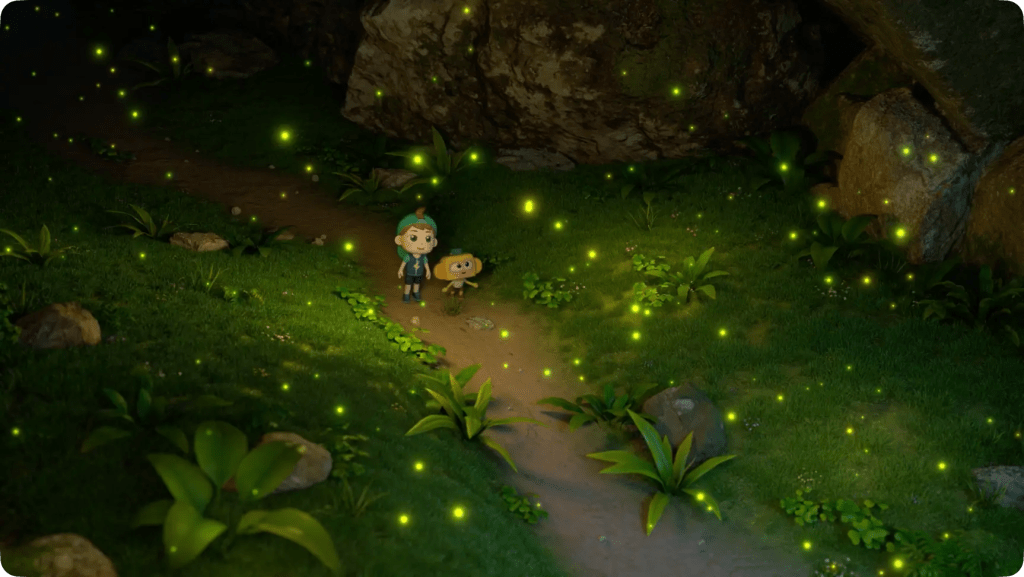
By breathing in and out, fireflies control their light to find friends, defend themselves, or even hunt. This internal light is crucial for their survival because it allows them to communicate in complete darkness.
What are the challenges for nocturnal insects?
The moon plays a vital role in how many nocturnal insects navigate their surroundings. Moths utilize the parallel light beams from the moon as a natural compass to fly in straight lines.
By maintaining a constant angle with these moonlight beams, they can travel smoothly through the night and easily adjust their direction when necessary.
However, human-made light sources often interfere with these natural navigation systems. Because light from streetlamps or flames travels in all directions rather than parallel lines, moths become highly confused when they fly near them.

They end up circling the light source or crashing into it because their internal navigation cannot process the different directions of the light. This demonstrates how human technology can impact the delicate survival instincts of nighttime creatures.
Fun Fact
- Moths use the moon as a natural compass by keeping a steady angle to its light.
- Sticky threads hanging like beaded curtains help cave-dwelling larvae catch their flying lunch.
- Fireflies carry a tiny “light bulb” on their belly that it uses to talk to other fireflies in the dark.
- A baby Firefly is a tiny underwater hunter that loves to snack on snails and shellfish.
- Adult Fireflies use their light as a warning sign to tell hungry birds that they do not taste good.
Vocabulary
- Nocturnal Insects: Species that are primarily active during the night and have developed specialized biological traits to survive and navigate in the dark.
- Bioluminescence: The natural process by which certain insects, such as fungus gnat larvae or fireflies, produce and emit light from their bodies through chemical reactions.
- Luminous Cells: Specialized cells in an insect’s body, such as those in fireflies, that require oxygen to generate a steady or flickering light.
- Celestial Navigation: A survival method where nocturnal insects, particularly moths, use the moon and its parallel light beams as a natural compass to fly in straight lines.
- Parallel Light Beams: Light rays from a distant source, like the moon, that travel in the same direction and allow insects to maintain a constant angle for steady travel.
- Artificial Light Sources: Human-made lights, such as streetlamps or flames, that emit light in all directions and can confuse the internal navigation systems of nocturnal creatures.
- Internal Navigation: The innate biological system used by insects to process light signals and adjust their flight direction to travel through their habitat safely.