
What Are the Facts About Insect Wings?
Are you looking for an easy way to teach your child about insect wings? We’ve put together a set of free materials that parents and teachers can use right away. In this lesson, your child will dive into the fascinating world of aerodynamics.
We’ll explore the diverse types and surprising survival functions of wings in the insect kingdom. Explore science in a more engaging way with captivating 3D videos and interactive quizzes. Download our app to get started!
Table of Contents
What You Will Learn From This Lesson
- Identification of the three main types of insect wings.
- Understanding of how venation supports flight in membranous wings.
- Functions of wings for protection, balance, and temperature regulation.
- Recognition of unique survival adaptations like water collection in desert beetles.
- Differences between forewings and s in various insect species.
How do insects use their wings?
Insects possess a variety of wing structures tailored to their specific needs. Most insects have four wings connected to their thorax. Membranous wings, found on dragonflies, are thin, light, and transparent. These wings are supported by a system of tiny tubes called venation, which acts like the sticks of a kite to hold the wing together during difficult flight maneuvers.

Other insects have wings that offer protection or unique visual patterns. Elytra are tough forewings, like those on a ladybug, that act as a protective shield for the soft hind wings used for flight.

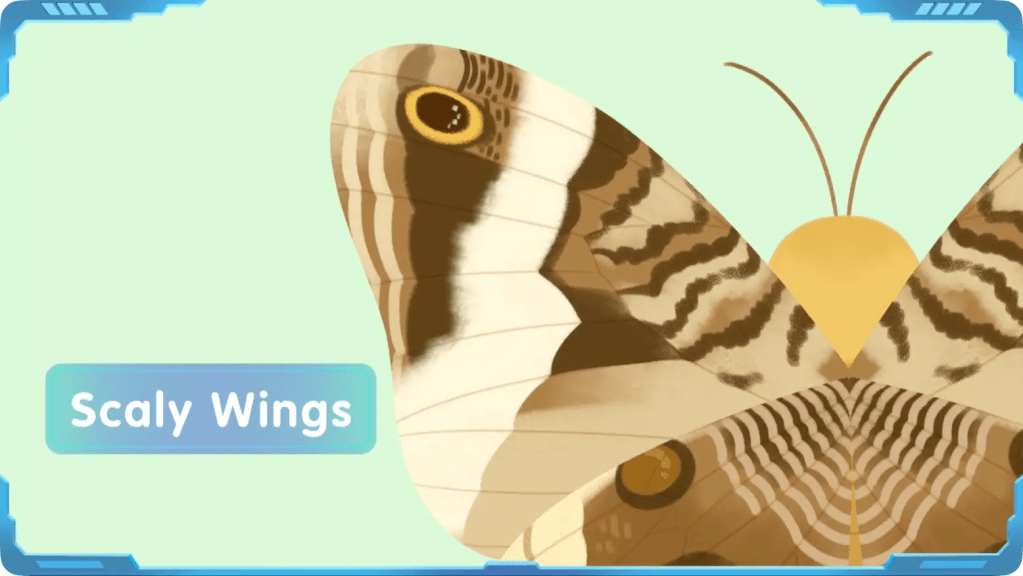
These hard covers have a composition similar to human fingernails. Meanwhile, butterflies and moths have scaly wings made of many colorful, fish-like scales that can create patterns to scare off predators.
What are the hidden uses of insect wings?
Wings serve many vital purposes beyond just transportation. Some insects have wings that have evolved into specialized sensory or survival tools. For example, the hind wings of houseflies have become tiny sticks called halteres, which help them maintain perfect balance while maneuvering through raindrops.
In extreme environments, wings become essential for basic survival. The Namib desert beetle uses its wings to collect water from morning fog, allowing the moisture to drip directly into its mouth in the dry desert.
In colder climates, honey bees flap their wings together inside the beehive to create heat, acting like living fan heaters to keep the colony warm during the winter.
Fun Fact
- Dragonflies have been flying on Earth for 300 million years—it is even older than the dinosaurs.
- The giant eyes of a Dragonfly are made of 28,000 tiny mini-eyes that help it see in every direction at once.
- The Seven-Spotted Ladybug has a hard, polka-dot shell that hides a secret pair of soft wings used for flying.
- A scared Ladybug will flip over and “play dead” to trick hungry birds into leaving it alone.
Vocabulary
- Membranous wings: Thin, light, and transparent wings found on insects like dragonflies.
- Venation: A system of tiny tubes that provides support and structure to an insect’s wing.
- Elytra: The tough, protective forewings of beetles and ladybugs that cover the flying wings.
- Scaly wings: Wings covered in tiny, colorful scales, typical of butterflies and moths.
- Halteres: Small, stick-like hind wings that help certain insects maintain balance during flight.