
What Are the Main Body Parts of the Insects?
Are you looking for an easy way to teach your child about insects? We’ve put together a set of free materials that parents and teachers can use right away. In this lesson, your child will dive into the fascinating world of entomology.
We’ll explore the unique body parts and history of insects. Explore science in a more engaging way with captivating 3D videos and interactive quizzes. Download our app to get started!
Table of Contents
What You Will Learn From This Lesson
- Identification of the three main body parts that define an insect.
- Functions of specialized eyes, antennae, and mouthparts for survival.
- Differences between insects and other small animals based on leg count.
- Knowledge of the ancient history and vast diversity of the insect family.
What is an insect?
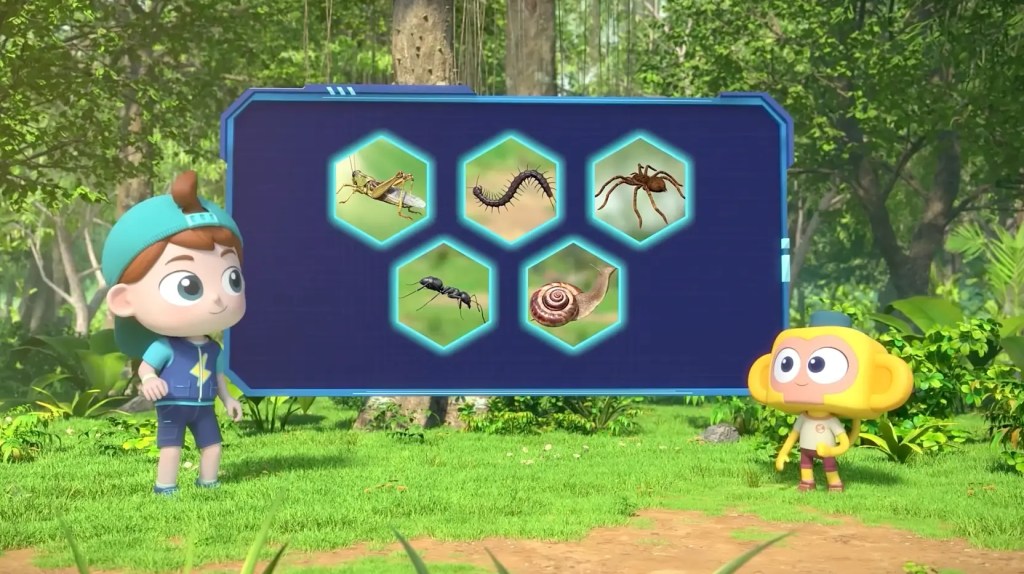
Identifying an insect becomes simple once you understand their universal physical traits. Every member of this group shares a body structure divided into three distinct sections known as the head, the thorax, and the abdomen. While many small creatures might look similar at first glance, true insects are distinguished by having exactly six legs and usually four wings attached to their middle section. This specific organization helps students separate them from other animals like spiders, which have eight legs, or snails, which have none.
How is an insect’s body organized?
The body of an insect is organized into specialized segments that handle different tasks. The head serves as the sensory center, containing antennae used for smelling and sensing danger, as well as compound eyes made of thousands of mini-eyes. The thorax is the middle section where the legs and wings are connected to help the animal move. Finally, the abdomen is a soft area at the back that contains vital organs, such as spiracles used for breathing.
Insects have evolved various tools to help them survive in their environments. For example, their mouthparts are shaped differently based on what they eat, such as the needle-like mouth of a mosquito used to suck blood. Their legs can also be specialized; grasshoppers have long hind legs for leaping away from predators, while a mantis has forelegs designed for catching prey. Most insects also use their four wings to fly, find mates, or search for food in faraway places.
Why is the insect family so large?
The insect family is the largest in the animal kingdom, with a history that spans millions of years. There are over one million known species of insects, which makes up two-thirds of all animals on Earth. They have been living on our planet for about 400 million years, meaning they were here long before the dinosaurs. This long history and massive number of species show how successful insects are at living all over the world.
Fun Fact
- Two out of every three animal species on our planet are insects, making them the ultimate global family.
- Ancient griffinflies had wingspans nearly as long as a human arm, making them much larger than today’s dragonflies.
- Antennae are amazing survival tools that allow insects to both “smell” food and “feel” nearby danger.
- A locust swarm can eat as much food in a single day as 2,500 people, making them the ocean-sized appetites of the insect world.
Vocabulary
- Insect:A member of the class Insecta characterized by a chitinous exoskeleton, a three-part body, three pairs of jointed legs, compound eyes, and one pair of antennae.
- Thorax: The middle segment of an insect’s body, located between the head and abdomen, which functions as the anchor point for all locomotive appendages, including wings and legs.
- Compound Eye: A visual organ found in insects consisting of many tiny independent photoreception units called ommatidia, which perceive light, color, and movement as a mosaic image.
- Spiracles: External respiratory openings found in pairs along the thorax and abdomen of an insect that allow air to enter the internal tracheal system for gas exchange.
- Antennae: Paired sensory appendages located on the head that are primarily used for smelling and mechanoreception sensing vibrations or environmental changes.