
How do plant adaptions help plants survive?
Are you looking for an easy way to teach your child about how plants survive in tough places? We’ve put together a set of free materials that parents and teachers can use right away. In this lesson, your child will dive into the fascinating world of strong plants.
We’ll explore how plants use special structures to live in freezing plateaus and dry deserts. Explore science in a more engaging way with captivating 3D videos and interactive quizzes. Download our app to get started!
Table of Contents
What You Will Learn From This Lesson
- Alpine plants use cushion shapes and fuzzy layers for warmth.
- Desert plants feature water-storing stems and evaporation-reducing spines.
How do plants survive on cold, windy plateaus?
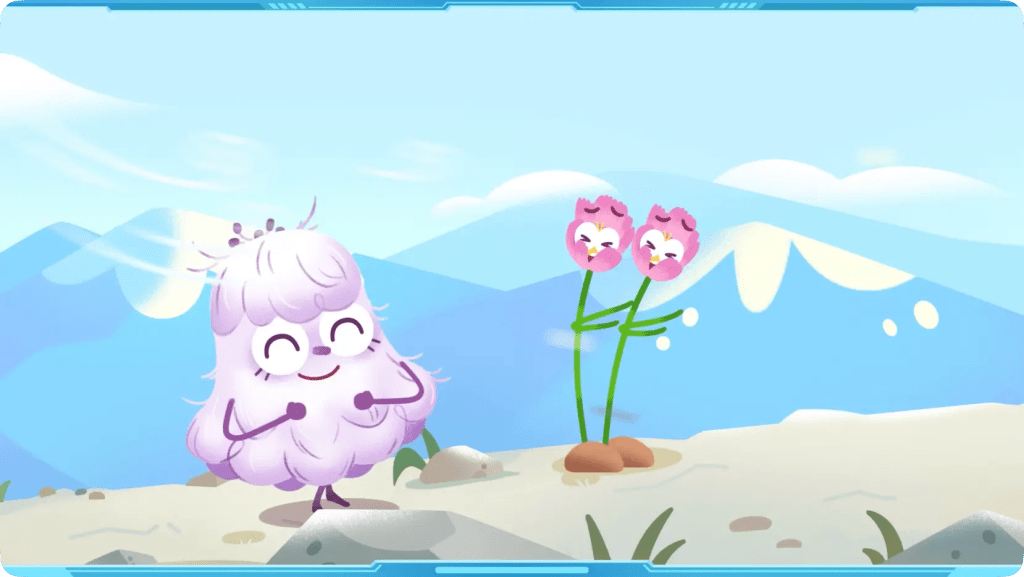
Plants that live on high-altitude plateaus face extreme cold and very strong winds. To survive, they have developed unique shapes and protective “clothing.”
For example, plants like carpet rock jasmine and Chionocharis grow very close to the ground in thick, dense clusters. This cushion-like structure helps them withstand the wind and stay attached to the rocks.
Other plants use clever ways to stay warm:
- Snowball plants: These are covered in thick, white fuzzy layers that look like a warm sweater, protecting them from the chilly air.
- Sikkim rhubarb: This plant features large, overlapping leaves that act like a natural greenhouse, trapping heat inside so the plant doesn’t freeze.
How do plants manage in the dry desert?
In the desert, the biggest challenge is the lack of water. Plants here are survival experts that focus on sucking up every drop of moisture and keeping it from escaping.
The cactus is a perfect example. It uses its roots to suck up water and its thick, fleshy stem to hold it. To prevent water from evaporating into the dry air, its leaves have turned into sharp spines.
Some plants grow to be massive water containers:
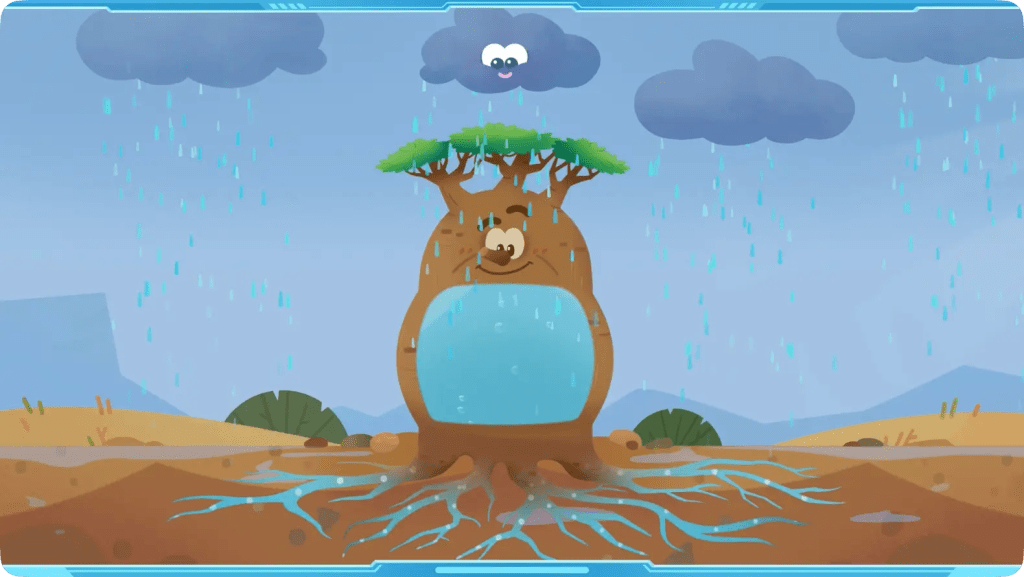
- Baobab tree: Often called a “super water tank,” this tree has a very thick, hollow-like trunk that stores huge amounts of water whenever it rains.
- Storage strategy: During the rainy season, the baobab soaks up as much water as possible to survive through long periods of drought.
By adapting their bodies to their surroundings, these plants can thrive in environments where most other life would struggle to survive.
Fun Fact
- Carpet rock jasmine grows in a “mat” shape to hide from the mountain wind.
- The snowball plant looks like a rabbit because of its fuzzy “winter sweater.”
- Cactuses don’t have regular leaves because they would lose too much water to the sun.
- A single baobab tree can store enough water to act as a desert reservoir.
- Sikkim rhubarb plants built their own “greenhouses” long before humans did!
Vocabulary
- Adaptation: A specialized physical structure or behavior that allows a plant to survive and thrive in its specific environment.
- Plateau: A high-altitude area characterized by extreme cold, low oxygen, and high-intensity winds where plants must grow low to the ground to survive.
- Cushion Plant: A growth form where plants like the carpet rock jasmine grow in dense, low-profile clusters to resist wind and trap heat.
- Natural Greenhouse: A structural adaptation, such as the overlapping leaves of the Sikkim rhubarb, used to trap solar heat and prevent freezing.
- Spines: Modified leaves found on desert plants like cactuses; they reduce the surface area to minimize water loss through evaporation and protect the plant from animals.
- Succulent Stem: A thick, fleshy stem designed to store large volumes of water for use during long periods of drought.
- Evaporation: The process by which water turns into vapor and is lost to the air; desert plants adapt their structures specifically to slow this process down.