
How Are Sedimentary Rocks Formed?
Are you looking for an easy way to teach your child about rocks and minerals? We’ve put together a set of free materials that parents and teachers can use right away. In this lesson, your child will dive into the fascinating world of sedimentary rocks.
We’ll explore the four-step process of how fragments become a rock. Explore science in a more engaging way with captivating 3D videos and interactive quizzes. Download our app to get started!
Table of Contents
What you will learn from this lesson
- Sedimentary rocks are made of fragments from other rocks.
- Sedimentary rocks form in a four-step process.
What are sedimentary rocks?
Sedimentary rocks are composed of fragments from other rocks and minerals. To form, a rock must go through four key steps: weathering, transportation, sedimentation, and lithification. These rocks are often records of the Earth’s changes over time.
The Four-Step Formation of Sedimentary Rocks
What is Weathering?
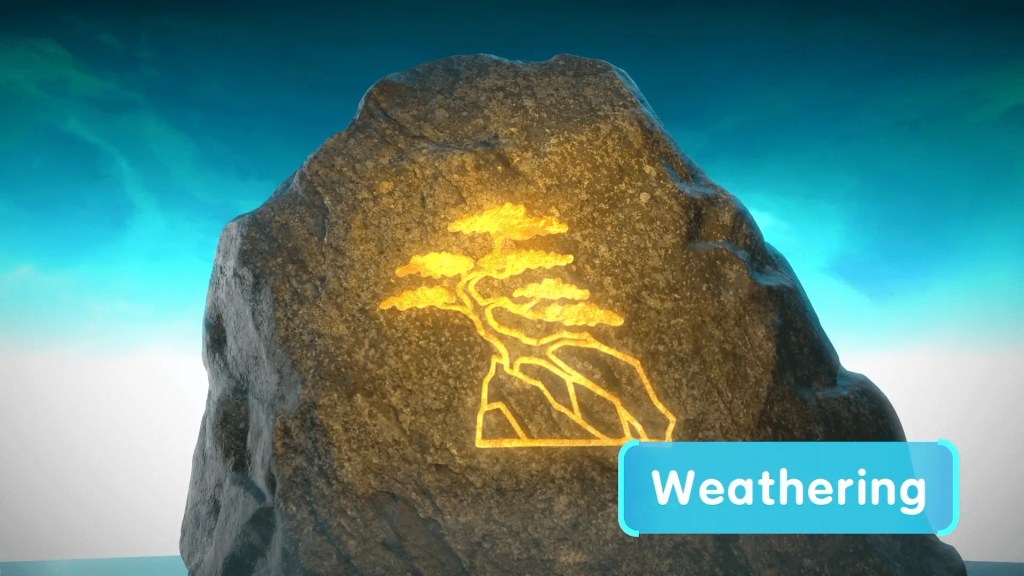
Weathering is the first step in the formation of sedimentary rocks, where rocks are broken down into fragments. Several natural processes can cause weathering. Temperature changes cause rocks to expand when hot and contract when cold, and this repeated cycle makes the rock crack.
Water also causes rocks to break apart. When water enters cracks and freezes, it expands, widening the cracks. The cycles of freezing and melting cause the cracks to become larger until the rock breaks apart. Additionally, rocks can be worn down by water erosion. Plants and animals can also contribute to rock fragmentation through activities like root growth.
How are Rock Fragments Transported?
Once a rock has weathered into fragments, it undergoes the second step: transportation. Water, such as in a river, is a major carrier, taking fragments away. Wind can also transport fragments, but it typically moves the smaller pieces.
What is Sedimentation and Lithification?
The third step is sedimentation, which occurs when the transported fragments eventually settle into a resting place. Typically, the larger fragments settle first. As water slows, smaller fragments accumulate on the surface.
The final step is lithification. As layers of fragments accumulate, the lower layers are compressed, ultimately forming the sedimentary rock. The rock is now complete. Chalk, for example, is a type of sedimentary rock formed from the shells of marine organisms, which may even contain fossils.
Fun Fact
- The expansion of frozen water in a crack can break apart a huge, hard rock.
- Some ancient sedimentary rocks look like a layered cake with alternating red and black bands.
- Banded iron formations, a type of sedimentary rock, formed nearly 3 billion years ago.
Vocabulary
- Sedimentary Rock: A type of rock formed from rock fragments and minerals that have been compressed after going through weathering, transportation, and sedimentation.
- Weathering: The initial process where a large rock is broken down into smaller fragments by forces like temperature changes, water, plants, or animals.
- Transportation: The movement of rock fragments by agents such as wind or water after they have undergone weathering.
- Sedimentation: The step where rock fragments eventually settle down and accumulate, with larger fragments typically settling before smaller ones.
- Lithification: The final stage of sedimentary rock formation, where accumulated layers of rock fragments are compressed, binding them together to form solid rock.