
Oviparous Marine Animals
Are you looking for an easy way to teach your child about oviparity? We’ve put together a set of free materials that parents and teachers can use right away. In this lesson, your child will dive into the fascinating world of marine reproduction.
We’ll explore how baby sea animals hatch from eggs containing all their necessary nutrients. Explore science in a more engaging way with captivating 3D videos and interactive quizzes. Download our app to get started!
Table of Contents
What You Will Learn From This Lesson
- Define oviparity as eggs developing outside the body of the mother.
- Explain that oviparous eggs contain all necessary nutrients for hatching.
- Identify different ways marine parents like seahorses and octopuses care for their eggs.
What is oviparity?
Oviparity is a specific type of reproduction where animal eggs develop outside the body of the mother. These eggs are unique because they contain every nutrient required for the baby animal to hatch successfully.
Since these babies grow within their own nutrient-rich environments, most oviparous marine animals are capable of living independently very shortly after they are born. Mothers often lay a high volume of eggs to ensure that enough of their offspring survive the many dangers found in the ocean.
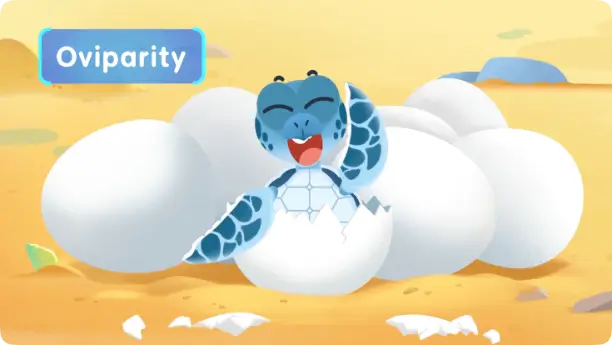
Where do sea animals lay eggs?
Many creatures throughout the ocean rely on oviparity to begin their life cycles. While some animals like sea turtles lay their eggs on the shore, the majority of species lay them directly in the sea.
Clownfish are known to lay their eggs on rocks. Other animals have evolved to carry their eggs with them for protection. For instance, the female peacock mantis shrimp holds her eggs in her claws until the moment they hatch.
Parental care in oviparous species
The level of care provided during oviparity varies greatly among different marine species. Male seahorses possess a special pouch where females store their eggs for protection. The father carries the eggs as they develop and then twists his body to squirt the babies out once they hatch.
Female octopuses are also highly dedicated parents who watch over their grape-like eggs for more than six months without eating. They spray water over the eggs to provide essential oxygen and use their final strength to send the babies into the open water to live on their own.
Fun Fact
- Oviparous eggs come fully packed with all the nutrients a baby needs to grow.
- A Seahorse uses its curly, monkey-like tail as a powerful anchor to hook onto seaweed.
- A hungry Seahorse has no teeth or stomach, so it must use its long snout to “vacuum” up tiny shrimp.
- Mother octopuses spend half a year guarding their eggs without consuming any food.
Vocabulary
- Oviparity: A specific type of reproduction where animal eggs develop and hatch outside the body of the mother using a self-contained nutrient supply.