
Symbiotic and Parasitic Relationships
Are you looking for an easy way to teach your child about symbiotic and parasitic relationships? We’ve put together a set of free materials that parents and teachers can use right away. In this lesson, your child will dive into the fascinating world of marine biology.
We’ll explore how ocean animals live together by either helping or harming one another. Explore science in a more engaging way with captivating 3D videos and interactive quizzes. Download our app to get started!
Table of Contents
What You Will Learn From This Lesson
- Identify how animals help each other in a symbiotic relationship.
- Describe the harm caused to a host in a parasitic relationship.
- Recognize real examples of marine animals living together in the ocean.
What is a symbiotic relationship in the ocean?
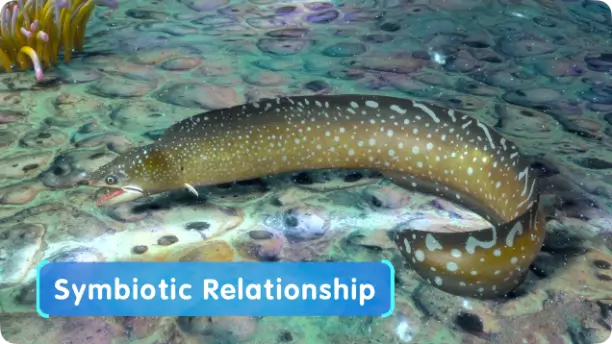
A symbiotic relationship occurs when different types of animals help each other survive. These creatures act like good buddies by providing services that benefit both sides. For example, the bluestreak cleaner wrasse eats parasites off moray eels to keep them healthy while feeding itself.
Similarly, sea anemones attach to hermit crab shells to find more food while using their stinging tentacles to protect the crab from predators. Sea turtles also participate in these partnerships when surgeonfish keep their shells clean in exchange for a meal.
What is a parasitic relationship in the ocean?
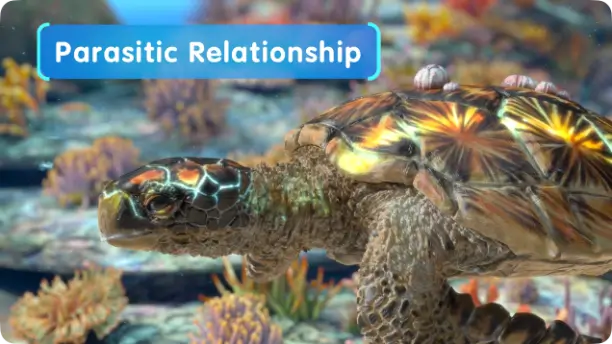
In contrast to helpful partnerships, a parasitic relationship happens when only one side gets benefits while the other side is harmed. Parasites are organisms that attach themselves to a host animal and refuse to leave.
Barnacles often demonstrate this by sticking to a sea turtle’s shell. If too many barnacles attach to the turtle, they can slow the animal down or even lead to its death.
While some animals find ways to rub these parasites off, the relationship remains one-sided because the parasite continues to feed off the host without giving anything back.
Fun Fact
- A bluestreak cleaner wrasse is a tiny underwater dentist that cleans a moray eel’s teeth for a free snack.
- A sea anemone acts like a stinging backpack for a hermit crab to keep hungry predators away.
- The sea turtle gets a free “car wash” from surgeonfish that nibble all the green algae off its shell.
Vocabulary
- Symbiotic Relationship: A partnership where two different animals help each other survive.
- Parasitic Relationship: A connection where one animal benefits and the other is harmed.
- Host: A larger marine animal, such as a fish or whale, that is weakened or harmed by a parasite living on or inside its body.
- Parasite: A specialized organism, such as a sea louse or tapeworm, that survives by draining nutrients from another living creature without giving anything in return.