
The Reproduction of Sea Animals
Are you looking for an easy way to teach your child about reproduction of sea animals? We’ve put together a set of free materials that parents and teachers can use right away.
In this lesson, your child will dive into the fascinating world of marine reproduction. We’ll explore how marine animals use different methods to grow and protect their offspring. Explore science in a more engaging way with captivating 3D videos and interactive quizzes. Download our app to get started!
Table of Contents
What You Will Learn From This Lesson
- Compare the processes of oviparity and viviparity in marine environments.
- Identify how different marine parents protect their developing offspring.
The breeding of sea animals primarily occurs through two common methods known as oviparity and viviparity.
Oviparous animals lay eggs that develop outside the mother’s body and contain all the nutrients required for a baby to hatch. Many of these young creatures live independently shortly after they are born.
In contrast, viviparous animals like dolphins give birth to live young that grow inside the mother’s body. These babies receive nutrients through a special internal channel and stay with their mothers for guidance after birth.
Unique egg protection strategies
Some species involved in the breeding of sea animals have unique ways of carrying their eggs to keep them safe. Female peacock mantis shrimps hold their eggs in their claws until they are ready to hatch.
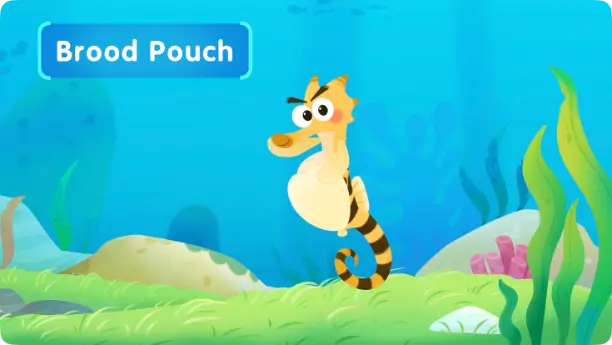
Male seahorses possess a specialized pouch where females store their eggs. This pouch provides a home for the eggs as they develop and protects them from various dangers until the father twists his body to squirt the babies out.

Parenting in the sea
Parenting plays a vital role in the breeding of sea animals even for those that lay eggs. Mother octopuses are incredibly dedicated and lay eggs only once in their lifetime. They watch over their eggs for more than six months without eating and spray water to provide necessary oxygen.
These mothers use their final bit of strength to send their babies into the open water to live on their own. Whether they are mammals or egg-layers, being a parent in the sea requires a significant amount of hard work.
Fun Fact
- A male seahorse is the only father on Earth who gets “pregnant”.
- The mother octopus is a superhero who guards her eggs for six months without eating a single bite of food.
Vocabulary
- Brood Pouch: A specialized external pocket found on animals like male seahorses that serves as a nursery to protect and oxygenate developing eggs.
- Spawn: A biological event where marine animals release a large number of eggs or sperm into the water to begin the process of reproduction.
- Larvae: A distinct juvenile stage that many marine animals enter after hatching, where they look and act very differently from their adult parents.