
What Is A Mangrove Forest?
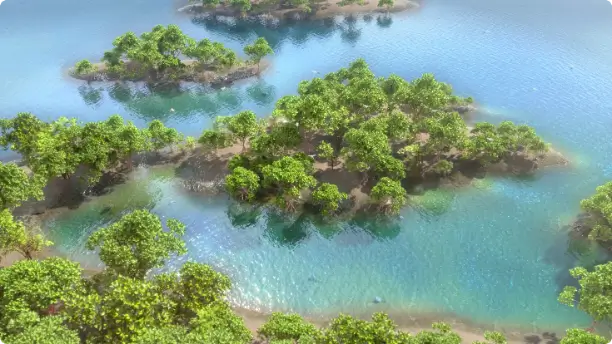
Are you looking for an easy way to teach your child about the mangrove forest? We’ve put together a set of free materials that parents and teachers can use right away.
In this lesson, your child will dive into the fascinating world of coastal wetlands. We’ll explore the unique trees and specialized animals thriving in the forest of the sea. Explore science in a more engaging way with captivating 3D videos and interactive quizzes. Download our app to get started!
Table of Contents
What You Will Learn From This Lesson
- Mangrove forests are unique coastal ecosystems defined by sea-based trees.
- Specialized fish like mudskippers demonstrate distinct land-based survival adaptations.
- Crustaceans like fiddler crabs possess physical structures for communication and feeding.
What is a Mangrove Forest?
The mangrove forest is a unique coastal environment often referred to as the forest of the sea. These areas are easily identified by trees that possess striking red branches. This ecosystem serves as a vital habitat where various marine species live and interact within the interconnected roots and muddy terrain.
What sea animals live in the mangrove forest?
A variety of specialized creatures make their home in the mangrove forest by adapting to both water and land. The mudflat within this forest is a natural habitat for the mudskipper. This fish is unique because it can store air in its gills and use its skin to breathe while on land. It uses muscular pectoral fins to walk like paddles and pelvic fins that act like suckers to help it climb trees.
Another fascinating resident of the mangrove forest is the fiddler crab. Male fiddler crabs are distinguished by having one large pincer which they use to communicate with other males. Females possess two small pincers which are used for eating. These animals depend on the specific conditions of the forest and mudflats to survive and build their nests.
Fun Fact
- Mangrove forests act as a natural wall that protects the coastline by breaking the power of storm waves and preventing the shore from washing away.
- Mangroves grow tall prop roots that look like many thin legs, helping the trees stand steady against the pushing and pulling of ocean tides.
- Mudskippers use their bellies like suction cups to climb tree roots, proving that some fish prefer the shore to the sea.
- While other fish gulp water, mudskippers can “breathe” air through their wet skin, allowing them to hang out on land like tiny explorers.
Vocabulary
- Mangrove Forest: A coastal habitat known as the forest of the sea that features trees with red branches.
- Mudflat: A natural habitat found in mangrove forests where animals like mudskippers live and build nests.
- Gills: Organs that help fish breathe in the water by opening and closing to take in oxygen.
- Pectoral Fins: Muscular fins on the sides of a mudskipper’s body used like paddles for walking.
- Pincer: A claw used by crabs for various tasks such as eating or communicating with others.