
What Is the Arctic Ocean?
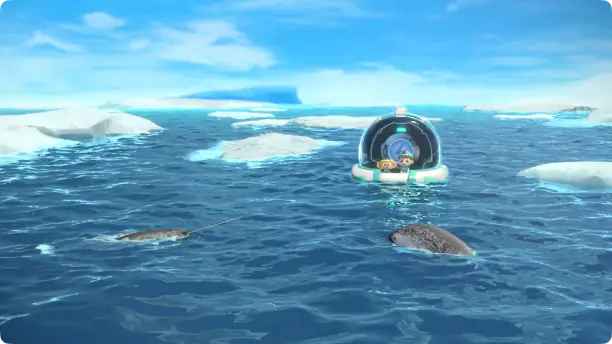
Are you looking for an easy way to teach your child about the Arctic Ocean? We’ve put together a set of free materials that parents and teachers can use right away. In this lesson, your child will dive into the fascinating world of the Arctic Ocean.
We’ll explore the unique animals and characteristics of the cold polar sea. Explore science in a more engaging way with captivating 3D videos and interactive quizzes. Download our app to get started!
Table of Contents
What You Will Learn From This Lesson
- The Arctic Ocean is a unique, icy environment that serves as a vital habitat for specialized wildlife.
- Marine mammals possess three distinct traits: live birth, lactation, and air-breathing.
- There is a biological difference between fish and marine mammals regarding how they breathe.
What Is the Arctic Ocean?
The Arctic Ocean is a quiet but gorgeous marine environment located in the northernmost part of the world. This sea is filled with ice, which creates a special habitat for many interesting animals. Because of its freezing temperatures, the creatures living here have developed amazing ways to survive in the cold.
What sea animals live in the Arctic Ocean?
The Arctic Ocean is home to incredible marine mammals such as beluga whales and narwhals. Beluga calves are born a different color but eventually turn completely white as they grow up. These whales are very social and use hundreds of different sounds to talk to each other.
Another famous resident is the narwhal, which is known for its long tusk. While this tusk looks like a horn, it is actually a long tooth used by males for courtship.
How do animals survive in the Arctic Ocean?
Animals in the Arctic Ocean that drink milk to grow up are called mammals. These marine mammals share three main traits: they are born looking like their mothers, they grow up through lactation, and they use lungs to breathe.
For example, a beluga mother feeds her calf by squirting milk directly into its mouth. Unlike fish, these mammals cannot breathe underwater. They must hold their breath during every dive, returning to the surface to fill their lungs.
Fun Fact
- Beluga whales are so chatty they can make hundreds of different sounds, including trills, clicks, and even quacks.
- Beluga whales start as grey babies and turn pure white only as they grow up.
- The large, round bump on a beluga’s forehead helps them focus sound to “see” and communicate underwater.
- These friendly whales are rarely alone, often living in giant families that include hundreds or even thousands of friends.
Vocabulary
- Arctic Ocean: A very cold and icy sea located at the top of the world where massive sheets of sea ice provide a unique habitat for specialized polar animals.
- Beluga Whale: A social white whale that lives in freezing northern waters and is famous for its ability to produce hundreds of distinct sounds to communicate.
- Narwhal: A unique polar mammal that is easily recognized by the long, spiral tusk that grows from the head of the male.
- Lactation: The biological process where mammal mothers produce nutrient-rich milk to feed their young, which is essential for babies to grow and stay warm in cold environments.