
What are Stars and planets?
Are you looking for an easy way to teach your child about space? We’ve put together a set of free materials that parents and teachers can use right away. In this lesson, your child will dive into the fascinating world of stars and planets.
We’ll explore their differences and characteristics. Explore science in a more engaging way with captivating 3D videos and interactive quizzes. Download our app to get started!
Table of Contents
What You Will Learn From This Lesson
- Stars produce their own light and heat.
- Planets do not produce light but orbit a star.
A quick look up at the night sky reveals countless luminous bodies. Did you know that most of these bright objects are actually stars, with only a few being planets? In fact, on a clear night with good environmental conditions, it’s possible to see over 6,000 stars across the whole sky.
What Are Stars?
Stars are celestial bodies that produce their own light and heat. They are like glowing balls with immense energy inside. This energy flows outward, which is how the light and heat are generated. The color of a star is directly related to its surface temperature. The hotter a star’s surface is, the bluer it appears. Conversely, the lower the temperature, the redder the star appears. For example, our Sun is a star with a surface temperature of approximately 5,500°C and appears yellow. The Sun is the central star around which eight planets revolve.

What Is a Planet?
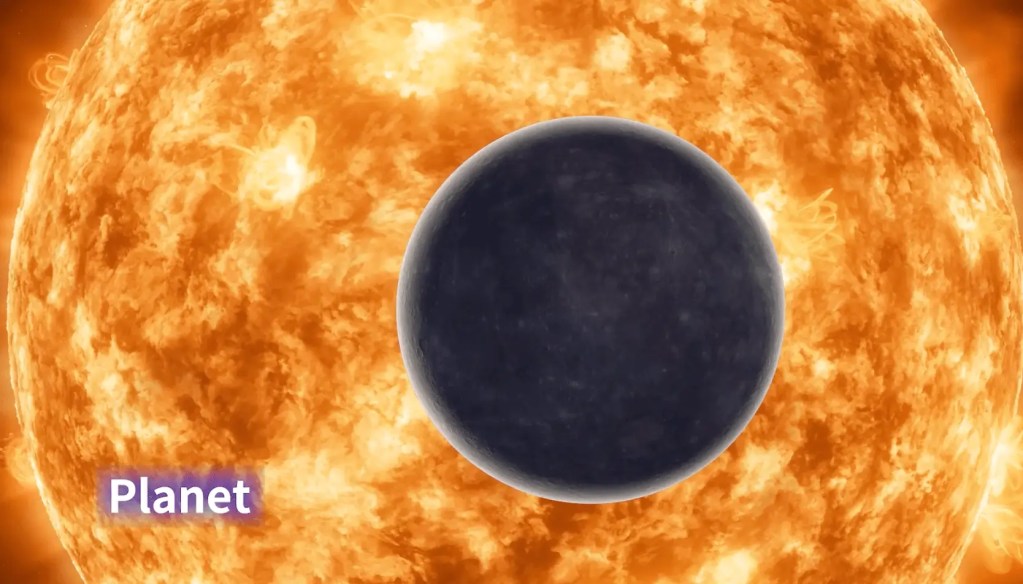
Planets do not produce light themselves,but reflect the light of a star while orbiting it.
For instance, our Earth is a planet that orbits the Sun. Our Solar System includes the Sun and the eight planets that revolve around it. The Solar System is a small part of the immense Milky Way galaxy.
Fun Fact
- Most of the bright spots we see at night are stars, not planets.
- On a very clear night, far from lights, people can see thousands of stars.
- A star’s color tells us its temperature; bluer stars are hotter than redder stars.
Vocabulary
- Stars: Celestial bodies that produce their own light and heat from internal energy and appear in various colors based on their surface temperature.
- Planets: Celestial bodies that do not generate their own light but instead orbit a star.
- Sun: The star at the center of our Solar System, which has a yellow appearance and a surface temperature of about 5,500°C.
- Solar System: The system consisting of the Sun and the eight planets that revolve around it, including Earth.