
What Are the Facts about Mars?
Are you looking for an easy way to teach your child about space? We’ve put together a set of free materials that parents and teachers can use right away. In this lesson, your child will dive into the fascinating world of Mars.
We’ll explore the characteristics, geography, and habitability of the planet Mars. Explore science in a more engaging way with captivating 3D videos and interactive quizzes. Download our app to get started!
Table of Contents
What You Will Learn From This Lesson
- Mars is the fourth planet from the Sun.
- Iron elements on Mars give it a red color.
- Mars has a varied and rich landscape.
- Humans cannot currently live on Mars.
Where Is Mars In The Solar System?
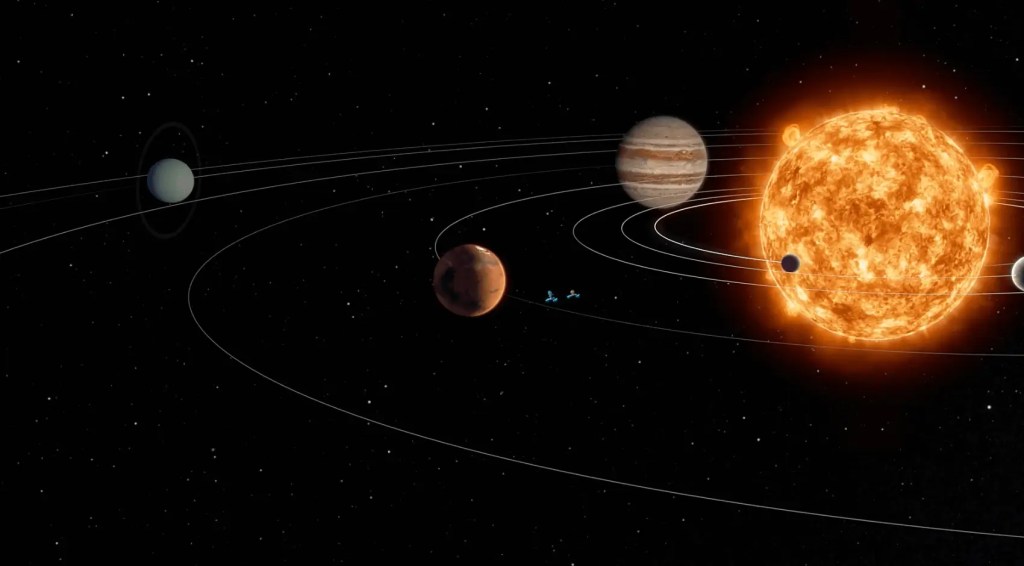
Mars is the fourth planet from the Sun. This location makes Mars Earth’s neighbor. This planet is classified as a terrestrial planet. It features a metallic core and a surface that is primarily composed of rock.
Why Is Mars Called The Red Planet?
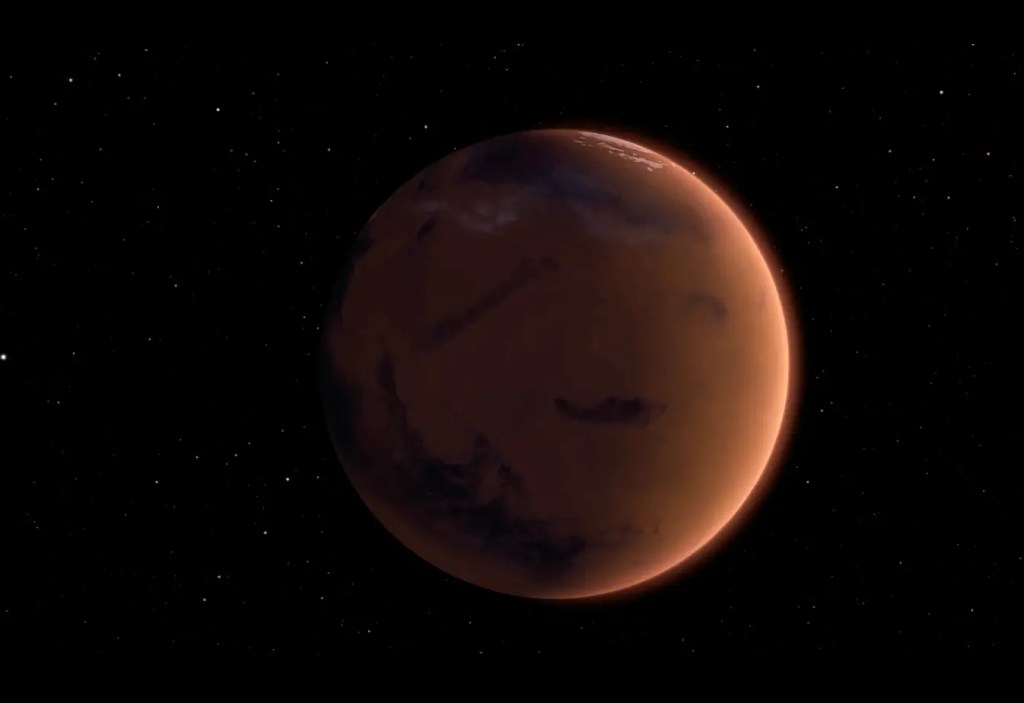
Mars is known for its distinctive reddish appearance. This color is due to the surface being rich in iron elements. Over time, these iron minerals have oxidized from contact with oxygen and water vapor. This process is similar to how iron rusts here on Earth, making it seem like a rusty planet.
What Are The Giant Landforms On Mars?
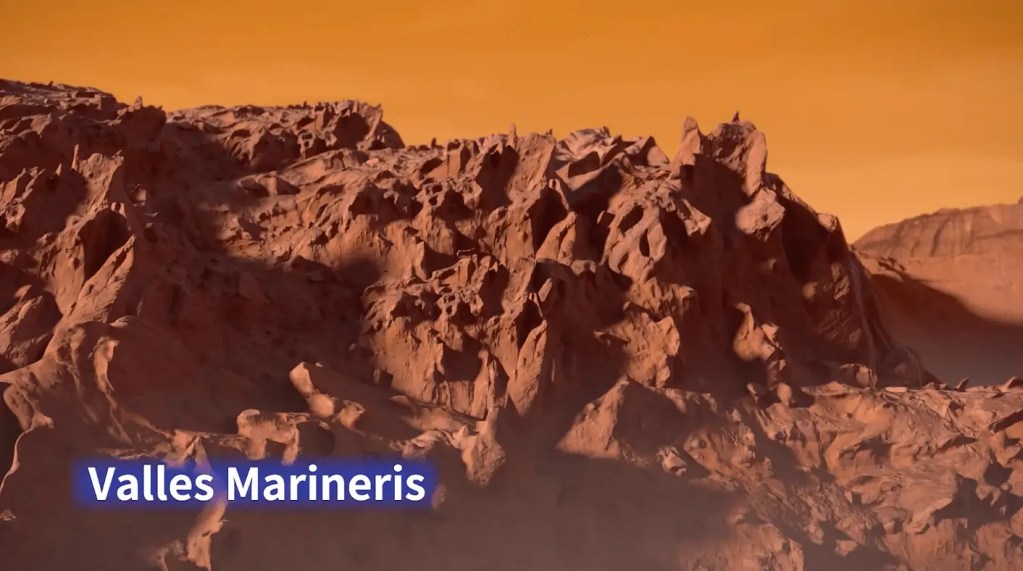
The planet Mars has a rich and diverse landscape. Its surface includes mountains, valleys, and numerous craters. Olympus Mons is the tallest mountain in the Solar System. It stands about 25 kilometers (about 16 miles), which is roughly three times the height of Mount Everest. Additionally, this planet is home to the Valles Marineris, which is the largest canyon system in the Solar System. These features were created by early geological activities, water movements, and meteorite impacts.
Can Humans Live On The Planet Mars?
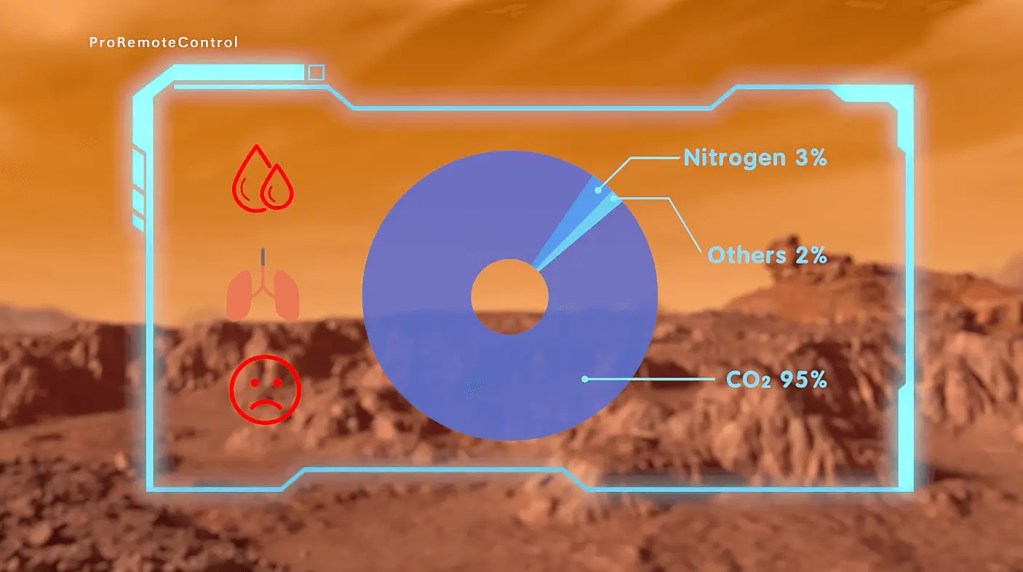
While Mars has day and night cycles, as well as four seasons like Earth, it presents severe challenges for life. The Martian atmosphere is very thin and is mostly composed of carbon dioxide, with very little oxygen. Furthermore, Mars is much colder than Earth because it is further from the Sun and its thin atmosphere cannot hold much heat. The typical temperature is around minus 55 degrees Celsius (minus 67 degrees Fahrenheit). There is no liquid water on the surface, though ice has been found at the polar regions. For these reasons, it is currently impossible for humans to live on the red planet.
=
Fun Fact
- The planet’s reddish color comes from iron on its surface rusting, similar to metal on Earth.
- Olympus Mons on Mars, the tallest mountain in our Solar System, is about three times the size of Mount Everest.
- Valles Marineris on Mars is the biggest canyon system in the Solar System.
Vocabulary
- Terrestrial Planet: A planet with a metallic core and a surface primarily composed of rock, similar to Earth.
- Olympus Mons: The tallest mountain in the Solar System, which is also a giant volcano located on Mars.
- Valles Marineris: The largest canyon system in the Solar System, consisting of many gorges on the surface of Mars.
- Impact Crater: A circular depression on a planet’s surface. On Mars, it’s often seen as a ring-shaped mountain. This feature forms from a meteoritic collision.