
What Are the Facts about Venus?
Are you looking for an easy way to teach your child about space? We’ve put together a set of free materials that parents and teachers can use right away. In this lesson, your child will dive into the fascinating world of Venus.
We’ll explore the characteristics of Venus, the solar system’s brightest and hottest planet. Explore science in a more engaging way with captivating 3D videos and interactive quizzes. Download our app to get started!
Table of Contents
What You Will Learn From This Lesson
- Venus is bright due to its atmosphere and closeness to Earth.
- Venus is the hottest planet because its atmosphere traps heat.
- Venus rotates slowly and in the opposite direction.
Venus Is the Brightest Planet in Earth’s Night Sky
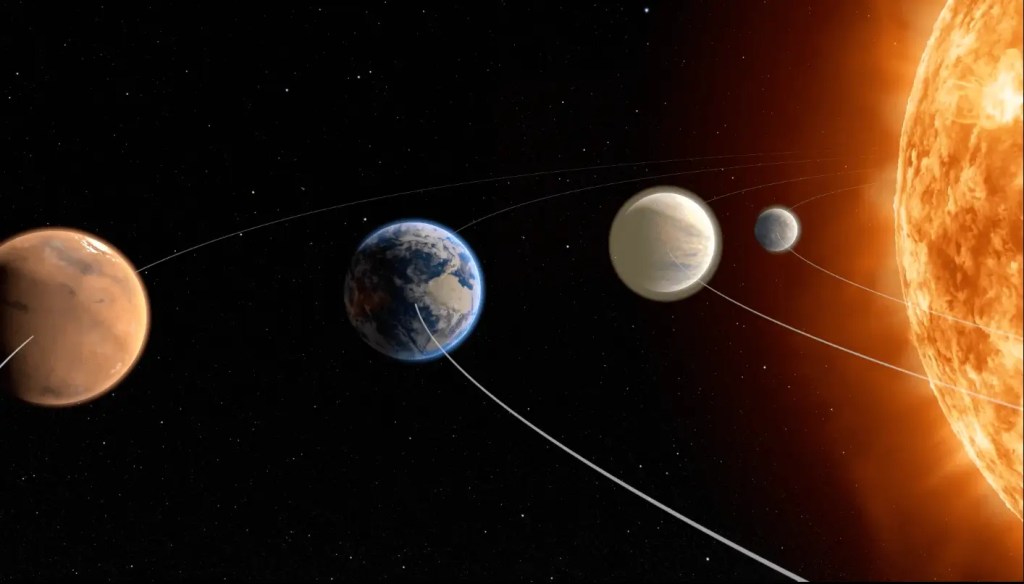
Venus’s brilliance is due to two main factors: its closeness to Earth and its dense atmosphere. The planet has a thick atmosphere primarily composed of carbon dioxide. This atmosphere acts like a mirror, reflecting a large amount of sunlight into space. Venus is the second closest planet to the sun. Its proximity to Earth is one reason why it looks so bright.
Venus Is the Hottest Planet in the Solar System
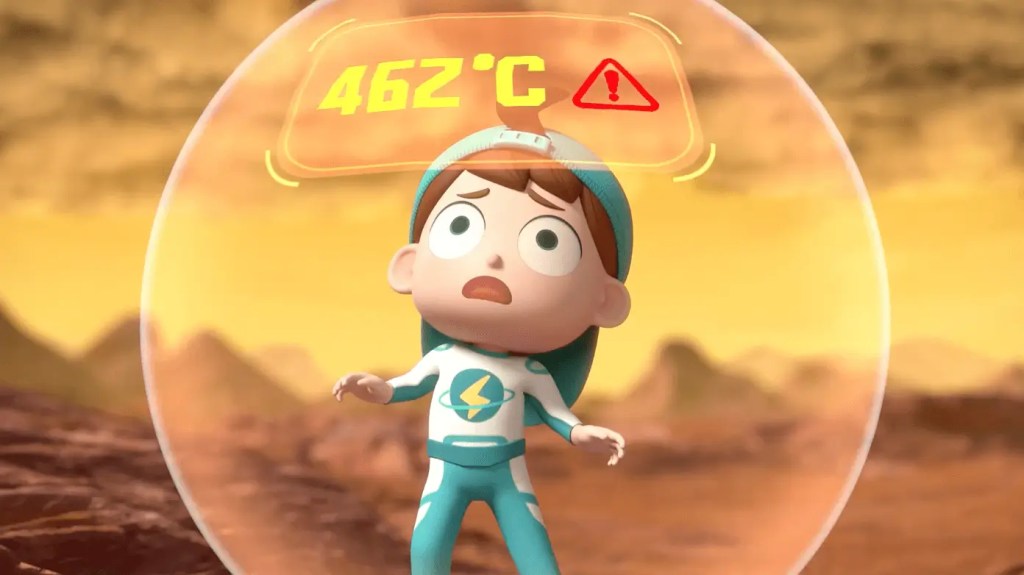
Venus is known as the hottest planet in the Solar System. This extreme heat is caused by its very dense atmosphere. The dense atmosphere not only absorbs the sun’s heat but also traps the heat inside the planet. This process is similar to how a greenhouse works. The surface temperature on the planet can reach up to 462 degrees Celsius (864 degrees Fahrenheit). Venus has an unfriendly environment, including the presence of acid rain within its atmosphere. Venus is also covered with a high number of volcanoes. There are thousands of volcanoes on the planet, giving it the most volcanoes of all the planets in the Solar System.
Venus’s Rotation Is Unique
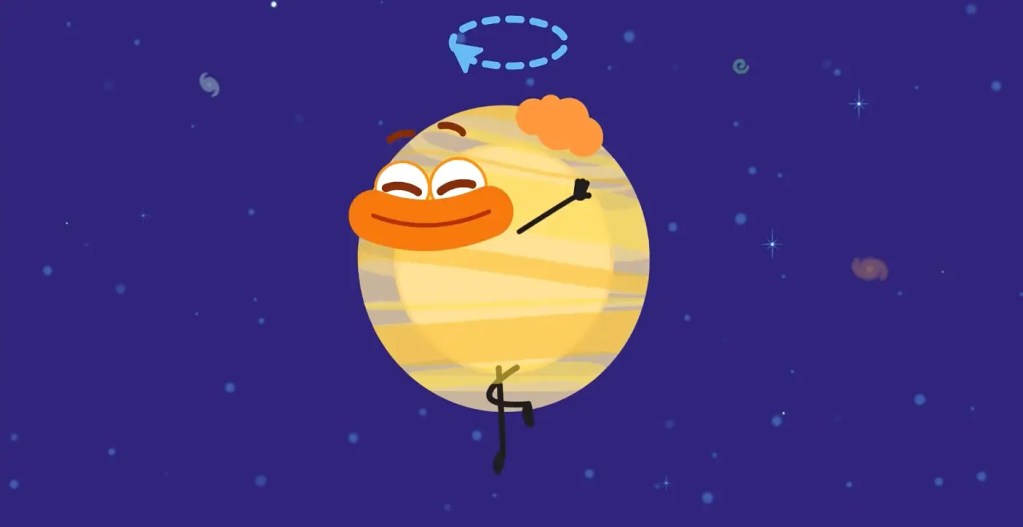
Venus is the slowest rotating planet in the Solar System. It takes 243 Earth days to complete just one rotation. Its rotation is unique because it rotates in the opposite direction from Earth’s rotation. This means that if its dense atmosphere were removed, the sun would appear to rise in the west and set in the east on Venus.
One theory suggests Venus originally rotated in a counterclockwise direction. However, it was hit by a large celestial body, which ultimately changed the direction it rotated to its current state.
Fun Fact
- Venus is the brightest planet in Earth’s night sky because its dense atmosphere reflects a lot of sunlight, like a mirror.
- If you could see the Sun on Venus, it would rise in the West and set in the East because it rotates backward.
- Venus is the hottest planet in the Solar System.
Vocabulary
- Atmosphere: A dense, thick layer of gases, mainly carbon dioxide, surrounding Venus, which reflects sunlight and traps heat.
- Rotation: The act of Venus spinning on its axis, which occurs in the opposite direction from Earth and is the slowest in the solar system.
- Carbon Dioxide: The gas that makes up the majority of Venus’s dense atmosphere.
- Volcano: A landform on the surface of Venus, which has the most of these structures among all the planets in the Solar System.