
What Are the Facts about Mercury?
Are you looking for an easy way to teach your child about space? We’ve put together a set of free materials that parents and teachers can use right away. In this lesson, your child will dive into the fascinating world of Mercury.
We’ll explore the characteristics of the smallest and fastest planet orbiting the Sun. Explore science in a more engaging way with captivating 3D videos and interactive quizzes. Download our app to get started!
Table of Contents
What You Will Learn From This Lesson
- Mercury is a small, gray planet with impact craters.
- A transit of Mercury happens when planets align.
- Mercury has extreme temperatures.
- Mercury is the fastest planet in the solar system.
What Does Mercury Look Like?
Mercury is the smallest of the eight planets in our solar system and is the planet closest to the Sun. The surface of this terrestrial planet appears gray and is bumpy. These bumps are actually impact craters that resulted from meteoroids crashing into its surface.

What Is a Transit of Mercury?
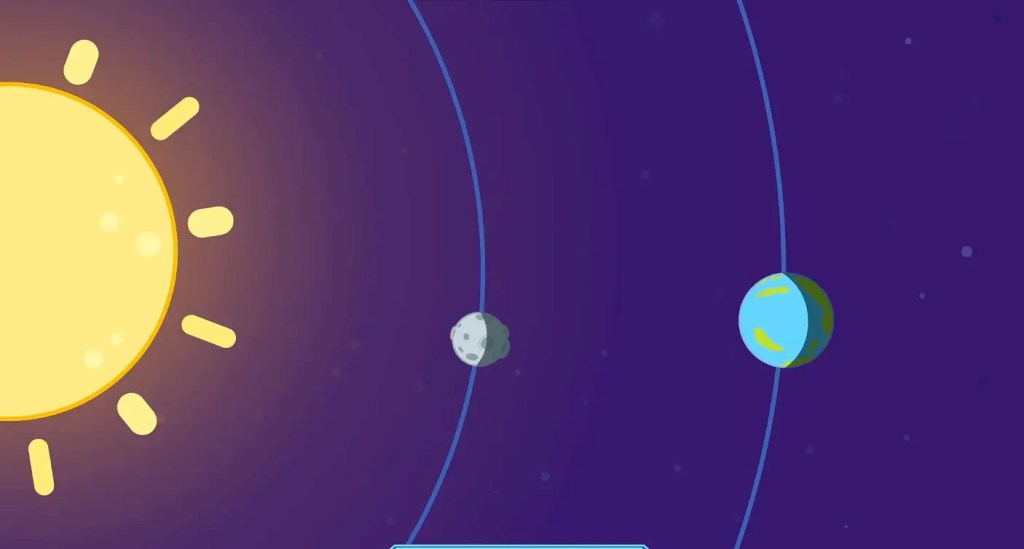
When Mercury, the Earth, and the Sun align in a nearly straight line, it creates an astronomical event called a transit of Mercury. During this event, we see Mercury appear as a small black dot moving across the Sun’s surface. Observing a transit offers a unique perspective on the planet’s small size.
Why Are Mercury’s Temperatures Extreme?
This Planet’s gravity is very weak due to its small mass, meaning it cannot hold onto a stable atmosphere. This lack of an atmosphere leaves the planet unprotected from meteoroid impacts.
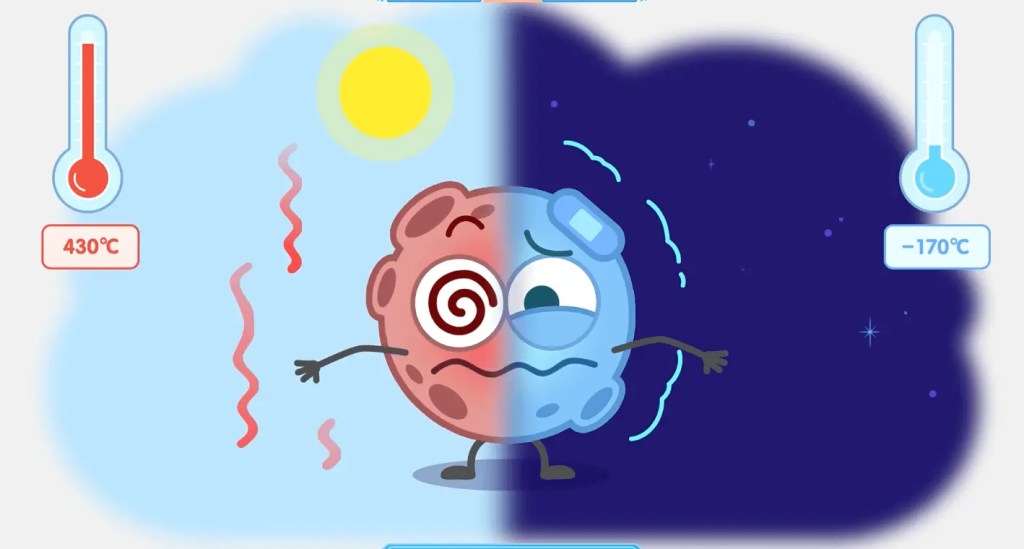
The absence of an atmosphere also causes the surface temperature to have a huge swing between day and night. The side facing the Sun can be extremely hot, reaching about 430 degrees Celsius (800 degrees Fahrenheit). The side facing away from the Sun is extremely cold, dropping to about minus 170 degrees Celsius (minus 280 degrees Fahrenheit). Mercury has the greatest day-to-night temperature difference of all the planets in the solar system.
Why Is Mercury the Fastest Planet?
Mercury is considered the fastest planet in the solar system. It has the shortest orbital period among the eight planets because it is the closest to the Sun. It only takes the Innermost Planet 88 Earth days to complete one full revolution around the Sun, compared to Earth’s 365 days.

Fun Fact
- It only takes Mercury 88 Earth days to complete one orbit around the Sun.
- When aligned with the Sun and Earth, Mercury appears as a tiny black dot crossing the Sun.
- The sunny side of Mercury gets as hot as 430 degrees Celsius (800 degrees Fahrenheit), but the dark side drops to about minus 170 degrees Celsius (minus 280 degrees Fahrenheit).
Vocabulary
- Mercury: The smallest planet in our solar system and the closest one to the Sun.
- Impact Craters: Bowl-shaped holes or depressions on a planet’s surface caused by meteoroids hitting it.
- Atmosphere: The layer of gases that surrounds a planet; Mercury has a very thin one due to its small mass and weak gravity.
- Transit of Mercury: A special event that happens when the planet Mercury passes directly between the Earth and the Sun. It looks like a tiny black dot moving across the Sun.
- Orbital Period: The time it takes for a planet, like Mercury, to complete one full revolution around the Sun.