
What Causes Thunder and Lightning?
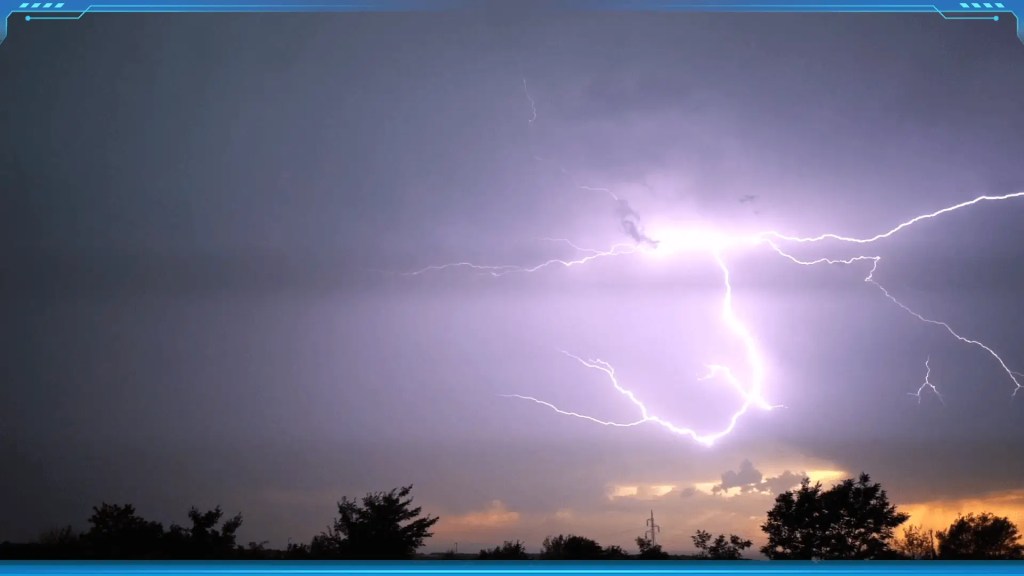
Are you looking for an easy way to teach your child about weather and climate? We’ve put together a set of free materials that parents and teachers can use right away. In this lesson, your child will dive into the fascinating world of thunder and lightning.
We’ll explore the formation and characteristics of lightning and thunder in the atmosphere. Explore science in a more engaging way with captivating 3D videos and interactive quizzes. Download our app to get started!
Table of Contents
What You Will Learn From This Lesson
- Colliding cloud particles create lightning and thunder.
- Lightning is seen first because light is faster than sound.
- A lightning rod safely directs electrical current to the ground.
How Are Lightning and Thunder Created?
Warm, moist air can rise high into the sky, especially during hot summer weather, to form large clouds. Inside these clouds, electrical charges can form. This happens when water droplets and ice crystals collide and rub against one another. These charges accumulate in different parts of the cloud. When the charges become too strong, energy is released suddenly in the form of bright light, which is lightning. The massive energy release simultaneously causes the air to expand violently, creating a loud boom known as thunder.
Why Do We See Lightning Before Thunder?
It’s a common observation that we see the flash of lightning before we hear the thunder. This is because light travels much faster than sound. Lightning also has immense power; it is capable of destroying buildings and starting fires. The collision and merging of water droplets and ice crystals in the cloud can also form rain, which is why storms with lightning and thunder often include rainfall.
How to Stay Safe in a Storm?
During a thunderstorm, it is safest to stay indoors. To protect buildings, tall structures in the city should be equipped with lightning rods. A lightning rod is a pointed metal rod connected to the ground by a wire, usually installed at the highest point of a building. It provides a safe, easy path for the lightning to follow if it strikes the building. When lightning strikes the rod, the electrical current is safely channeled into the ground, protecting the building.
Fun Fact
- Lightning and thunder often occur in the summer because they are both created in hot and humid conditions.
- When lightning strikes a rod, the electricity flows safely down a wire into the ground, neutralizing the charge.
- The tremendous release of energy from lightning can ionize the air to create super-hot plasma.
- Lightning is powerful enough to start fires and can cause severe damage to buildings and other structures.
- Lightning rods are installed on tall buildings to act as a conductor, guiding the electrical current safely into the earth.
Vocabulary
- Lightning: A powerful, bright flash of light created when strong electrical charges in a cloud are released.
- Thunder: A loud, booming sound caused by the sudden, violent expansion of air when a lightning discharge occurs.
- Electrical Charges: The accumulated electrical energy on water droplets and ice crystals that results from their collisions within a cloud.
- Lightning Rods: Metal rods installed on the highest point of tall buildings to safely conduct lightning strikes into the ground.