
What Is a Hurricane?
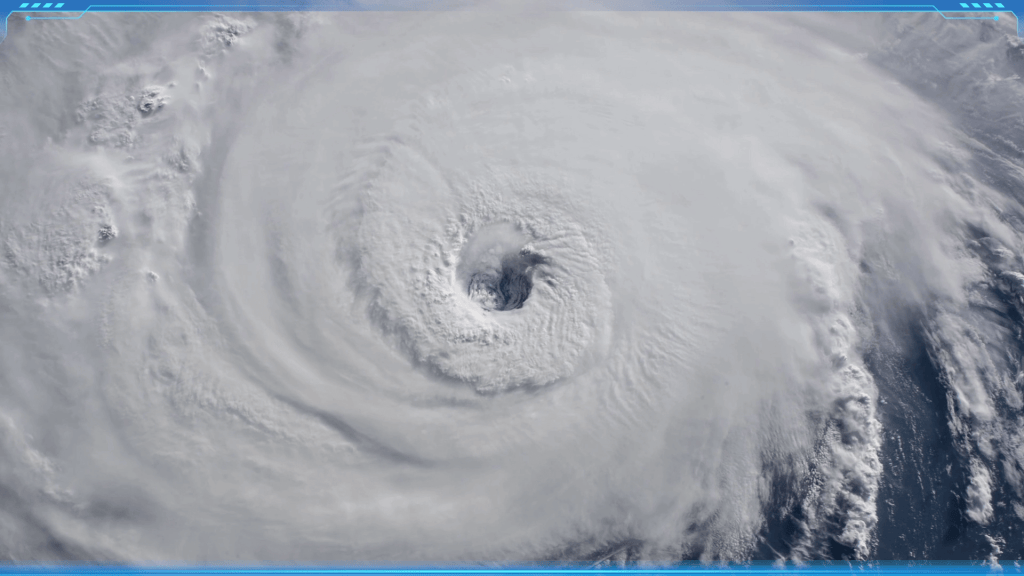
Are you looking for an easy way to teach your child about weather and climate? We’ve put together a set of free materials that parents and teachers can use right away. In this lesson, your child will dive into the fascinating world of the hurricane.
We’ll explore how powerful spinning storms form and behave. Explore science in a more engaging way with captivating 3D videos and interactive quizzes. Download our app to get started!
Table of Contents
What You Will Learn From This Lesson
- Hurricanes are powerful, spinning tropical storms.
- Hurricanes form over warm ocean waters with low air pressure.
- The center of a hurricane is called the eye and has calm winds.
- Seek shelter in sturdy buildings and close doors for hurricane safety.
Hurricanes are a type of spinning tropical storm. Similar to a tornado, a hurricane is a powerful rotating wind system. These storms can be incredibly powerful and cause widespread destruction and damage to property and infrastructure. When a strong storm like this approaches, it’s important to take safety precautions.
How Does a Hurricane Form?
Hurricanes usually form over vast, warm ocean waters. This warmth causes the area to have a consistently high temperature. High-temperature areas create low air pressure. This low-pressure center is intense, and the air around it creates areas of relatively cooler high pressure. Air moves from these surrounding high-pressure areas towards the low-pressure center. Due to the Earth’s rotation, these incoming winds begin to spiral or curve in towards the center. This rotation creates the powerful spinning hurricane.
What Is the Eye of a Hurricane?
The center of the rotating hurricane is called the eye. As the hurricane spins, it creates an outward force that counteracts the winds blowing inward. This results in a central, circular area where the wind is mostly calm. If you are in the eye, the hurricane may appear to have disappeared because there is no wind.
How Should We Stay Safe When a Hurricane Approaches?
Because hurricanes are powerful natural forces, we must be careful when they approach. Safety measures include following evacuation orders from local officials and seeking shelter in a sturdy building away from windows.
Fun Fact
- Typhoon Tip was so wide that it covered an area roughly half the size of the entire United States.
- The winds of Typhoon Tip were measured at speeds faster than a high-speed train, over 300 kilometers per hour (about 190 miles per hour).
- Waterspouts, which are like tornadoes over water, can suck up a school of fish into the air.
- A strong outward force is created as a hurricane spins, which causes the center to be calm.
- Hurricanes are initially formed over the ocean where very warm water creates an intense low-pressure center.
Vocabulary
- Hurricane: A powerful, rotating tropical storm formed by winds spiraling into an intense low-pressure center over warm ocean waters.
- Eye of a Hurricane: The central, circular region of a hurricane where it is mostly calm because outward forces offset the inward-blowing winds.
- Low Pressure: An atmospheric condition often created by high temperatures, where air molecules are less dense and weigh less on the surface.