
What Is Hail?
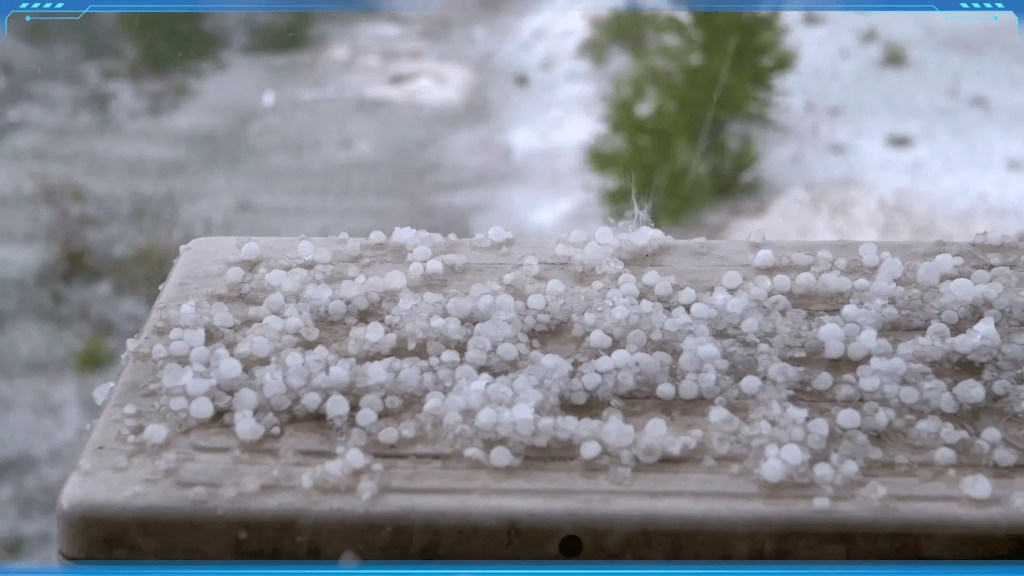
Are you looking for an easy way to teach your child about weather and climate? We’ve put together a set of free materials that parents and teachers can use right away. In this lesson, your child will dive into the fascinating world of hail.
We’ll explore the formation and dangers of hailstones during summer storms. Explore science in a more engaging way with captivating 3D videos and interactive quizzes. Download our app to get started!
Table of Contents
What You Will Learn From This Lesson
- Hail is a form of ice precipitation.
- Hailstones form inside clouds with air currents.
- Stay indoors to be safe during a hailstorm.
How Do Hailstones Form?
Hail is a form of precipitation consisting of ice. Hailstones are chunks of ice that are at least 5 millimeters (0.2 inches) or larger. While the air on the ground may be hot, especially in the summer, these ice chunks can still fall from the sky. This is because the mechanism for its formation is linked to the hot and humid conditions of summer weather. The significant size of hailstones is often what keeps them from melting completely before they reach the ground.
The formation of hail starts with warm, moist air rising quickly into the sky due to intense heat and humidity. This rapid movement creates strong, changeable air currents. Inside the cloud, the water vapor turns into small water droplets and ice crystals. The large ice crystals are known as hail embryos, which represent the initial form of the hailstone.
The powerful air currents toss these hail embryos and water droplets up and down inside the cloud. As the embryos tumble, they repeatedly collide with the surrounding water droplets, which freeze onto the surface, causing the ice pellets to grow larger. The hailstone continues to grow until it becomes too heavy for the air currents to lift it. At this point, the hailstone begins to fall.
How Do We Stay Safe from Hail?
It is important to understand that hail can be very destructive. Hailstorms can cause damage to buildings and injure people. When hailstones are falling, the safest measure is to stay indoors.
Fun Fact
- Hail is a type of ice that is larger than 5 millimeters (0.2 inches) and falls from the sky.
- Hail forms on hot, humid summer days because the strong heat drives the air movement needed for its creation.
- Hailstones grow as they are rapidly carried up and down by strong air currents inside a cloud.
- The large size of a hailstone is what keeps it from melting entirely before it hits the ground.
- A growing hailstone adds layers of ice, similar to the rings found in a tree trunk.
Vocabulary
- Hail: A form of precipitation that consists of chunks of ice, typically with a diameter greater than 5 millimeters (0.2 inches). These large ice chunks can still fall from the sky in hot and humid conditions.
- Air currents: Strong and changeable air movements inside a cloud are created by the rapid rising of warm, moist air. These powerful currents toss and tumble particles inside the cloud during hail formation.
- Water droplets: Small spheres of liquid water found inside a cloud that are vital for the formation of hail. As they collide with ice crystals or hail embryos, they freeze onto the surface to make the particle grow.
- Ice crystals: Tiny frozen water particles found high up inside a cloud. The larger ones can form the initial core, or hail embryo, of a hailstone.
- Hail embryos: The initial and larger ice crystals in a cloud that represent the early form of a hailstone. They grow bigger when they are repeatedly tossed by air currents and freeze to water droplets.