
What Is Sunset?
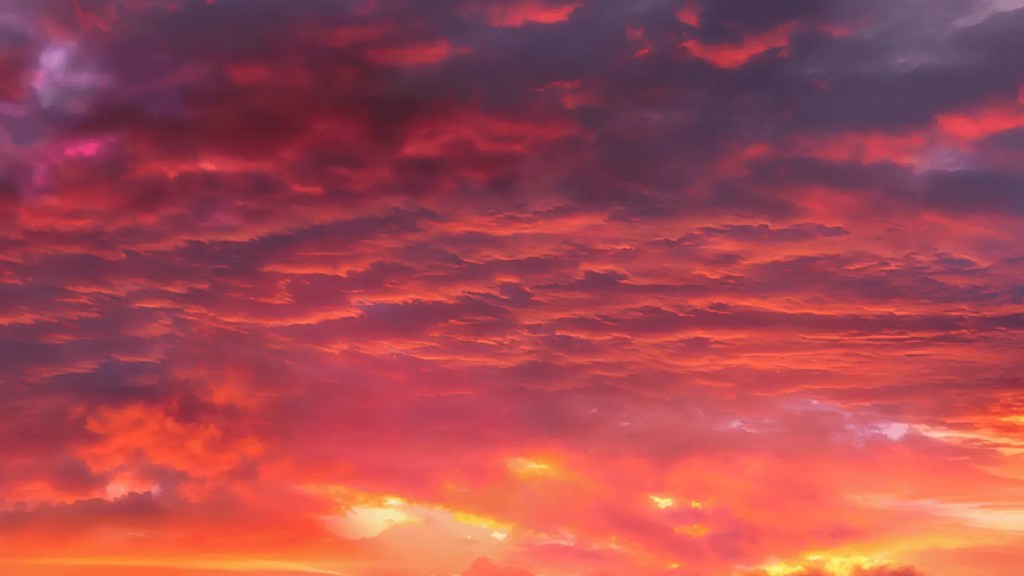
Are you looking for an easy way to teach your child about weather and climate? We’ve put together a set of free materials that parents and teachers can use right away. In this lesson, your child will dive into the fascinating world of sunset.
We’ll explore the science behind the red and colorful light of the setting sun. Explore science in a more engaging way with captivating 3D videos and interactive quizzes. Download our app to get started!
Table of Contents
What You Will Learn From This Lesson
- Sunset is when the sky looks red or orange.
- Red light forms a sunset by traveling a long distance.
- Sunlight scatters when it hits air molecules.
- Blue light scatters easily, making the daytime sky blue.
How Does a Red Sunset Form?
Sunset refers to the phenomenon where the sky appears beautifully red or orange as the sun sets. This striking visual is created when the clouds and the atmosphere are illuminated by the light of the setting sun. The specific formation of a red sunset is closely linked to how sunlight interacts with the Earth’s atmosphere.
The distinct red hues of a sunset are the result of sunlight traveling a long distance through the atmosphere. When the sun is near the horizon in the morning or evening, its light must pass through a substantial amount of the atmosphere to reach our eyes. This extended path causes most of the blue light to be scattered and diminished by atmospheric molecules.
The scattering process redirects the shorter-wavelength blue light away from your eyes in all directions, leaving behind the longer-wavelength red light. The red light, which is less easily scattered, is then the dominant color that reaches the ground. This remaining red light is what illuminates the clouds and atmosphere, forming the visually stunning red sunset.
What Happens to Sunlight in the Air?
Sunlight is actually a mixture of colored light. When this light enters the Earth’s atmosphere, it encounters numerous air molecules. Light hitting these molecules scatters, meaning it disperses in all directions. This process is known as scattering.
Not all colors scatter equally. Blue light scatters more easily than red light. Conversely, red light is less prone to scattering and experiences much less loss as it travels. The intensity of the scattering depends on the distance the light must travel through the atmosphere.
Why Is the Daytime Sky Blue?
During the day, especially around noon, the sun is high, and its light travels a shorter path through the atmosphere. In this shorter path, the blue light is readily scattered by air molecules but is not completely consumed.
Because the blue light scatters easily and reaches our eyes from many directions, the entire sky appears blue to us. As the day progresses toward sunset, the light’s path lengthens, and the scattering effect intensifies, which eventually leads to the depletion of blue light and the appearance of red light.
Fun Fact
- The beautiful colors of a sunset are caused by light traveling an extra long way through the air.
- When light hits air molecules, it doesn’t travel straight; it spreads out, a process called scattering.
- Blue light is scattered completely away when the sun is setting, leaving mostly red light for us to see.
- At sunrise and sunset, the sky looks like it’s on fire because red light colors the clouds and air.
- The sky is blue at noon because blue light scatters easily, filling the air with color without being completely lost.
Vocabulary
- Sunlight: The light from the sun is actually a mixture of colored light. This light travels through the atmosphere and is crucial for creating the colors seen in the sky during a sunset.
- Atmosphere: The layer of air surrounding the Earth that sunlight must pass through. The distance light travels through the atmosphere affects which colors reach our eyes.
- Scattering: The process in which light hits air molecules and disperses in all directions. Blue light scatters more easily than red light.
- Blue light: This is a color component of sunlight that scatters more easily in the atmosphere. Its intensity is diminished when sunlight travels a long distance through the air.
- Red light: This is a color component of sunlight that is less prone to scattering. It is the remaining and dominant color that illuminates the sky to create a sunset.