
How Does the Human Body Work?

Are you looking for an easy way to teach your child about the human body? We’ve put together a set of free materials that parents and teachers can use right away. In this lesson, your child will dive into the fascinating world of how the human body works.
We’ll explore the essential components of the human body, from its smallest units to its complex systems. Explore science in a more engaging way with captivating 3D videos and interactive quizzes. Download our app to get started!
Table of Contents
What you will learn from this lesson
- Organs are parts of the body that have specific functions.
- Cells are the smallest units of the human body.
- Cells form tissues, tissues form organs, and organs work together to form systems.
Organs: The Body’s Working Parts
An organ is like a specialized machine in our body’s factory, composed of several different tissues that work together to perform a complex task. Every organ has a vital role in keeping you alive and healthy.
External Organs and the Senses
Our sensory organs are how we experience the world! They are the body’s essential connection points with everything around us:
- Eyes: The cameras that let you see colors, shapes, and movement.
- Ears: The receivers that let you hear sounds, from music to a whisper.
- Nose: The detector that lets you smell cookies baking or fresh-cut grass.
- Tongue/Mouth: The taster that lets you enjoy different flavors.
- Skin: The largest organ! It’s the protective layer that allows you to feel touch, temperature, and pain.
Internal Organs: The Core Workers
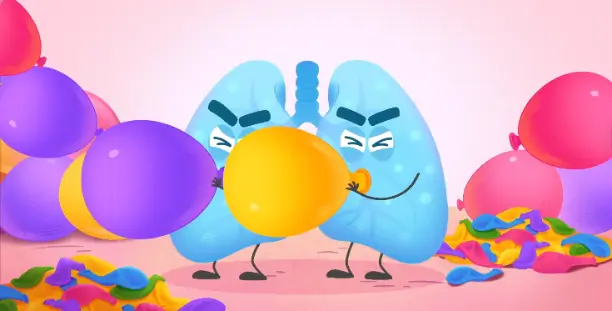
- Lungs: We have two lungs, and they help us breathe. When you breathe in, they expand, and when you breathe out, they shrink. We breathe almost 30,000 times a day!
- Heart: Located behind the left lung, the heart is a vital internal organ and the busiest organ in the human body. It beats about 100,000 times a day to pump blood throughout your entire body.
- Stomach: This organ is like a stretchy bag! It digests the food we eat.
Systems: Organs Working Together
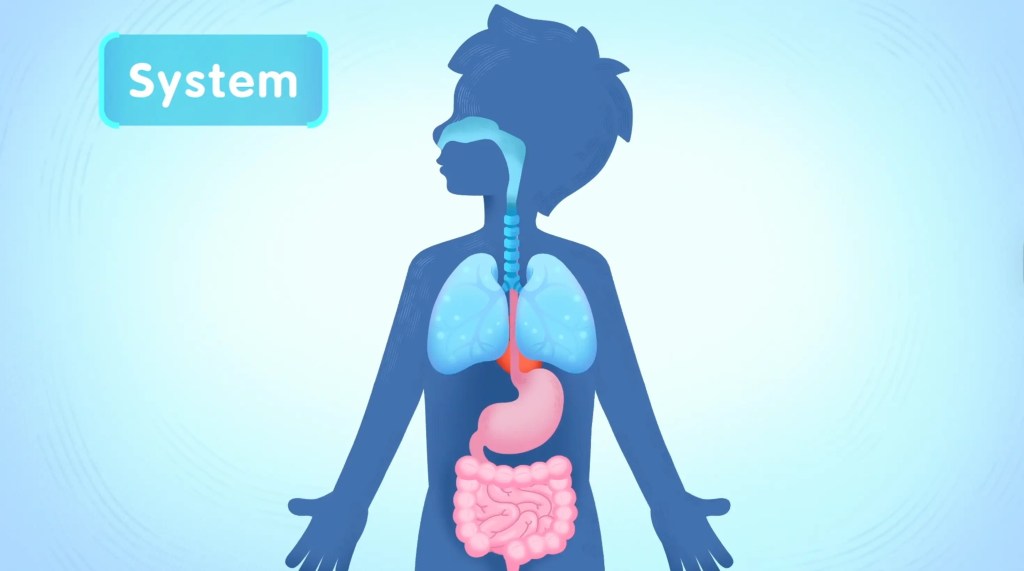
To function properly, organs must work in coordination with other organs to form complex systems. These systems carry out the body’s major operations. Most scientists divide the body into 11 systems. Here are three essential ones:
- The Digestive System: The mouth, esophagus, stomach, and intestines work together as a system to turn the food you eat into important nutrients.
- The Respiratory System: The nose, throat, trachea, and lungs form this system. We need it to breathe fresh air!
- The Circulatory System: The heart and all the blood vessels work together to transport blood (and the oxygen it carries) all over the body.
Cells and Tissues: The Tiny Building Blocks
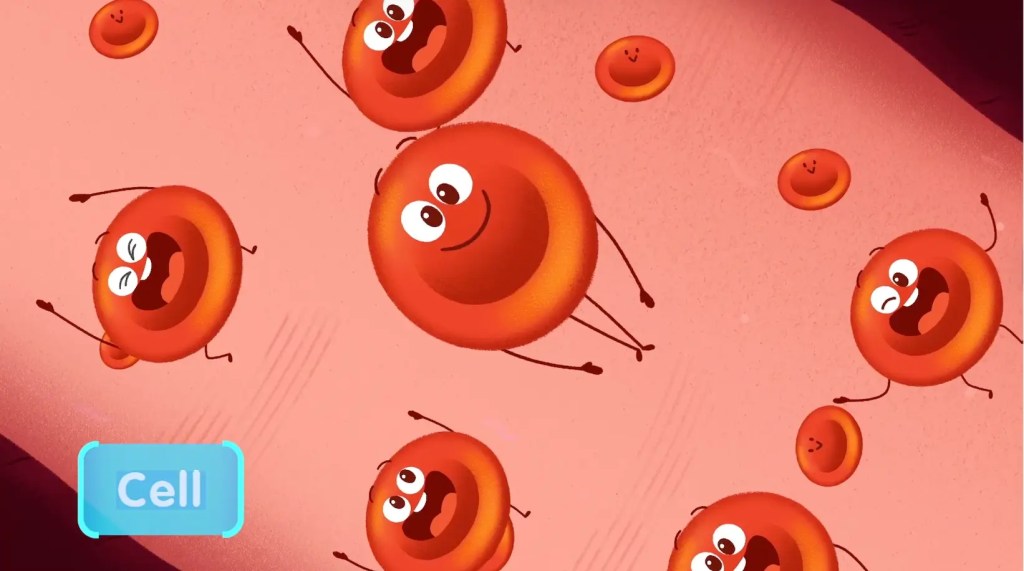
Every part of your body—from your hair to your toes—is made of tiny, tiny units called cells. They are so small you can’t see them without a powerful microscope! Cells are everywhere inside you, and they are the smallest units of the human body.
There are about 200 types of cells, and they all have different shapes. For example, you have Red Blood Cells, Nerve Cells, and even little hero cells called Macrophages that consume viruses and bacteria.
When cells of the same kind stick together using a “sticky substance” and work as a team, they form a tissue. For example, muscle cells stick together to form muscle tissue. Other tissues include connective tissue, epithelial tissue, and nervous tissue, and these tissues form our various organs.
Fun Fact
- The heart, the body’s busiest organ, beats about 100,000 times every day.
- In one day, the air you breathe in and out could inflate 3,500 balloons!
- When you eat a big meal, your stomach can stretch to be ten times its normal size.
- The human body is made up of trillions of incredibly tiny cells.
- Defender cells, like white blood cells, travel through your body to fight off bad germs and viruses.
Vocabulary
- Organs: Parts in our bodies that have certain functions.
- Systems: Multiple organs cooperating to complete a specific job.
- Cells: The smallest units of the human body.
- Tissues: Similar cells and the sticky substance between them that bind together.